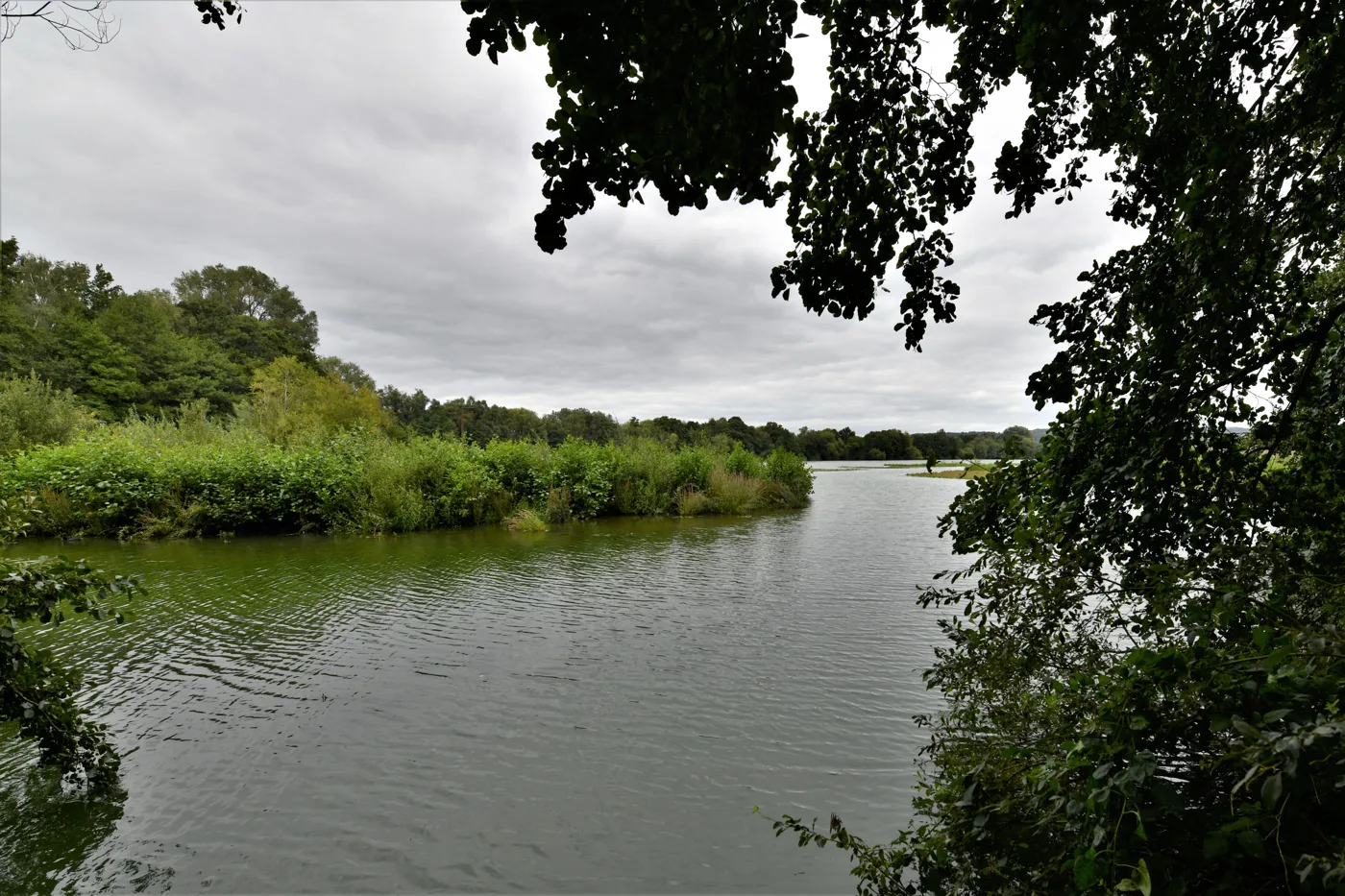

Kent Wildlife Trust says 1,500 homes would weaken the reserve's last link to open country. What the SSSI citation protects, and who rules on the objection.
The consultation closed at 11.59pm on Thursday 17 September and the council has published 2,175 responses. The Trust's objection, and everyone else's, now goes to the Government with the plan; an inspector examines both in 2027. Otford Parish Council has asked for the same allocation to be deleted.
Kent Wildlife Trust is asking the public to object to the 1,500 homes proposed on farmland immediately north of Sevenoaks Wildlife Reserve. It says the scheme would weaken one of the last open links between the reserve and the countryside beyond it. The Trust made the call on 5 August, a month before the consultation closed on 17 September. (Kent Wildlife Trust, Kent Wildlife Trust calls on public to stand up for Sevenoaks Wildlife Reserve against major development threat, 5 August 2026)
The Trust runs the reserve, and the council’s own development brief for the land says cooperation with it “will be required”. We set out what that brief proposes in 1,500 homes north of Sevenoaks: what the brief promises.
What the Trust is objecting to
The site is ST4-7, Land North of Sevenoaks, West of Otford Road, in the Regulation 19 version of the district’s draft Local Plan. The Trust summarises the allocation as 1,500 homes, 12 Gypsy and Traveller pitches, a new community and leisure centre and associated infrastructure.
Its objections fall into three parts.
Connectivity. The Trust says building on land north of the reserve “could fundamentally change the landscape and weaken one of the few remaining connections between Sevenoaks Wildlife Reserve and the wider countryside”, leaving the reserve “increasingly enclosed by development”.
The River Darent. The allocation includes land in areas of high flood risk, including functional floodplain. The Trust says large-scale development could increase polluted runoff and sediment reaching the Darent, and reduce the floodplain’s ability to store water, “increasing flood risk for both wildlife and local communities”.
A new way in. The concept masterplan proposes a northern entrance leading directly from the new housing into the reserve. At present visitors arrive through the visitor centre, where staff can advise on responsible access. With more than 5,000 new residents within walking distance, the Trust says an unmanaged entrance “could make it harder to protect wildlife from disturbance, littering and other anti-social behaviour”.
Emma Waller, senior planning officer at Kent Wildlife Trust, said: “Whilst we recognise the need for new homes, we strongly believe in the right development in the right place. We’re concerned these proposals could have far-reaching consequences for the reserve, the River Darent and the wider landscape that wildlife depends on. Once these vital connections are lost, they are incredibly difficult to restore.”
What the reserve is, on the official record
The reserve is not simply a well-liked local green space. At its heart is Sevenoaks Gravel Pit, a Site of Special Scientific Interest, and Natural England’s citation for it is a public document that sets out precisely what is protected and why.
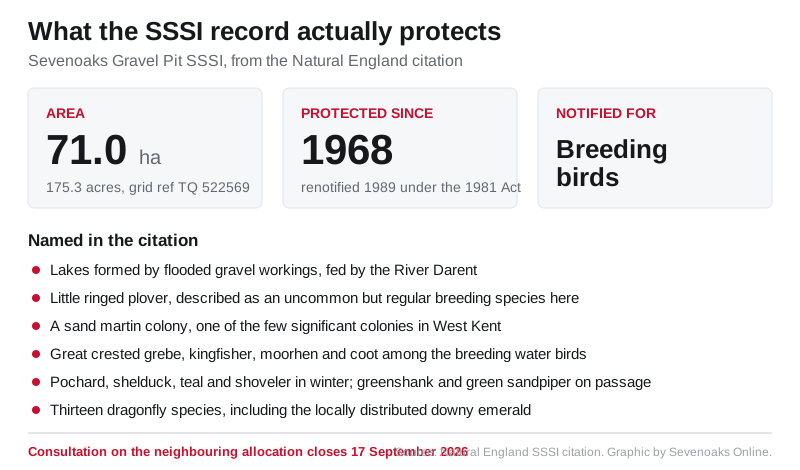
The citation covers 71.0 hectares, or 175.3 acres, at grid reference TQ 522569. The site was first notified in 1968 under the 1949 Act, last revised in 1981, and renotified in 1989 under the Wildlife and Countryside Act 1981. The local planning authority named on it is Sevenoaks District Council.
The reason for notification is the bird life of the lakes. They were formed by the flooding of former gravel workings and are fed by the Darent. Among what the citation names:
- little ringed plover, “an uncommon but regular breeding species here”
- a sand martin colony in a sand face in the south of the site, “one of the few significant colonies in West Kent”
- a large rookery
- great crested grebe, kingfisher, moorhen and coot among the breeding water birds
- pochard, shelduck, teal and shoveler among wintering and passage wildfowl
- greenshank and green sandpiper among passage waders
- thirteen species of dragonfly, including the locally distributed downy emerald
(Natural England, SSSI citation, Sevenoaks Gravel Pit (PDF))
One caution on that document. It is a 1989 record, and it describes the site as managed “as the Sevenoaks Wildfowl Reserve by the Jeffery Harrison Memorial Trust”. The reserve is now run by Kent Wildlife Trust, and the Trust’s own figure for the SSSI is more than 2,000 recorded species, well beyond the birds the citation was written around.
The Trust’s second ask
Alongside responding to the council, the Trust is inviting people to fill in a questionnaire, “Preserve Sevenoaks Wildlife Reserve”, about what they value in the reserve and the land around it. It says the answers will shape the campaign and feed an alternative vision for the landscape, one that would:
- “protect the Wildlife Reserve and the River Darent”
- “restore habitats and strengthen ecological networks”
- “improve climate resilience” (Kent Wildlife Trust, Preserve Sevenoaks Wildlife Reserve)
That questionnaire was the Trust’s own campaign tool. It was not a submission to the council, and filling it in did not put a comment on the record: the Local Plan counted only responses sent to the council itself, by the closing date.
What it means for you
An allocation in a Local Plan is not a planning permission. If a Government inspector finds the plan sound and the council adopts it, that settles the principle of about 1,500 homes here. It also fixes the list of things a developer would have to provide. Layout, phasing and the detail of any northern access into the reserve would all come later, through planning applications residents can comment on separately.
The inspector weighs comments on whether the plan is legally compliant and “sound”, so an objection that engages with the evidence carries more weight than one that simply opposes. The tests are set out in the council’s guide to responding, and they are the same tests the Trust’s representation will be read against.
Comments had to arrive by 11.59pm on Thursday 17 September 2026, and that door is shut: the plan and every representation go to the Government later this year, with examination in 2027 and use in planning decisions from 2028 if the inspector approves it. Every development brief, including the one for this site, stays on the council’s Regulation 19 downloads page. (Sevenoaks District Council, Local Plan proposals)
The reserve itself, off Bradbourne Vale Road, is open to visitors through the Jeffery Harrison Visitor Centre. For the state of the river running through it after this summer, see Kent’s hosepipe ban and what the Darent’s own gauges show. To follow any application that eventually comes forward on the land, our guide to Sevenoaks planning applications explains how to search and track the council’s portal.
Sources
- Kent Wildlife Trust, Kent Wildlife Trust calls on public to stand up for Sevenoaks Wildlife Reserve against major development threat, 5 August 2026
- Kent Wildlife Trust, Preserve Sevenoaks Wildlife Reserve
- Natural England, SSSI citation, Sevenoaks Gravel Pit (PDF)
- Sevenoaks District Council, Development Brief, ST4-7 (SEV24) Land north of Sevenoaks, Regulation 19, July 2026 (PDF)
- Sevenoaks District Council, Sevenoaks District Local Plan, Regulation 19 Publication version (PDF)
Image: Sevenoaks Wildlife Reserve, The East Lake, by Michael Garlick, CC BY-SA 2.0, via Geograph. Graphic by Sevenoaks Online.
Have your say