
Search any Sevenoaks application by postcode or reference on Public Access, free and no account needed. You get 21 days to comment, and here is what counts.
If a new house, an extension, a shop conversion or a 136-home estate is proposed near you in the Sevenoaks district, you have a right to see the plans and a right to comment before anyone decides them. The whole record is online, free, and open to anyone, neighbour or not. Most people only find out a scheme exists once the diggers arrive. This is a plain guide to the Sevenoaks planning portal, where every application lives, how long you get to have your say, what the council will and will not listen to, and a roundup of the notable schemes shaping the district right now.
The quick answer
The Sevenoaks planning portal is Public Access, run by Sevenoaks District Council at pa.sevenoaks.gov.uk/online-applications. It is free, and you need no account to look: search by street, postcode or a reference such as 21/01254/FUL to open the drawings, the officer reports, the case officer’s name and the comment deadline. To see what has just been lodged near you, open the weekly list and filter it by your parish. You normally get 21 days to comment, and comments must be in writing. One catch trips people up: you cannot submit a new application on Public Access. That goes through the national Planning Portal instead.
Where to find Sevenoaks planning applications
Every application received or decided by Sevenoaks District Council goes on one online register, the Public Access portal. You can search it here:
You do not need an account to look. Type a street name, a postcode, or an application reference number, and you get the documents, the drawings, the case officer, the dates, and any comments already submitted. The council confirms that “weekly lists of all planning applications received or decided by us are available online through our PublicAccess portal”, and you can open that weekly list directly to see what landed in the last seven days.
The Sevenoaks planning portal, and how to read a reference number
If you have heard the council’s system called the “Sevenoaks planning portal”, that is the same thing as Public Access: one register, one address, covering the whole district.
A reference number looks like 21/01254/FUL. The two digits are the year, the
middle block is the running number, and the suffix tells you the type: FUL is a
full application, HOUSE is a householder application such as an extension, LBC
is listed building consent, and OUT is outline. If you only know the address, the
search box will find it.
What it means for you
The practical upside is that you can check any address before you buy, rent, object, or just before you wonder what the scaffolding next door is for. The plans, the heritage statements, the drainage reports, the highways comments, all of it sits on the same page. If a neighbour is building, the portal is where you read exactly what was approved, and to what conditions.
How to search the Sevenoaks planning portal, step by step
Once you know the fields, the portal takes under a minute:
- Open pa.sevenoaks.gov.uk/online-applications. No login is needed to view.
- Choose Simple Search for a quick look, or Advanced Search to filter by ward, date range or application type.
- Type a street name, a full postcode, or a reference such as
21/01254/FUL. If you are unsure of the exact address, keep the keyword loose and narrow it from the results. - Open an application, then use the Documents tab for the drawings, heritage and drainage reports, and the Comments tab to read or add a representation.
- Note the case officer, the target decision date and the consultation deadline shown on the summary, so you know how long you have to comment.
If you would rather not run a search, open the weekly list to see everything registered or decided across the district in the last seven days.
Get email alerts for new applications near you
Running the same search every week is easy to forget, and the portal can do it for you. Register a free account on Public Access (top right of pa.sevenoaks.gov.uk/online-applications), run the search you care about, usually a postcode, a street or your ward, then use Save Search and switch on notifications. The portal then emails you whenever a new application that matches is validated, so you hear about a neighbour’s plans on day one rather than after the 21-day comment window has half gone. It is the single best habit if you want to keep an eye on a specific street: set the search once and let the council’s own system watch it for you. An account also lets you track individual applications and manage the comments you have already submitted.
What is on the Sevenoaks planning portal right now
We ran the council’s own weekly list again on Monday 12 October 2026 and read every entry for the week beginning 5 October, to see what the Sevenoaks planning portal actually holds rather than describing it in the abstract.
| Week beginning | Applications validated |
|---|---|
| 7 September 2026 | 61 |
| 14 September 2026 | 56 |
| 21 September 2026 | 57 |
| 28 September 2026 | 45 |
| 5 October 2026 (the week we read) | 30 so far |
| 12 October 2026 | 38 (our roundup) |
Three things that week’s 30 entries tell you about how the portal works, none of which the council spells out.
A past week’s list is not frozen. When this page ran the same search on Friday 11 September, the week beginning 7 September held 29 applications. A month later the same search returns 61 for the same week, more than double. From outside you cannot tell how much of that is late validation dated back and how much is late indexing, but the lesson holds either way: a week you checked a fortnight ago may have far more on it today. If you are watching a street, re-run the search or set up the saved search above rather than trust the note you made.
Same-day validation is effectively a tree-works privilege. Eleven of the 30 were
validated on the day they arrived. Ten of those eleven were tree applications, the WTCA,
WTPO and five-day W5DAY notices, and the eleventh was a consultation from another
council. Not one householder or full application was validated the same day. The other 19
waited a median of 21 days between being received and being validated, the quickest six
days and the slowest 115: the conversion of redundant farm buildings into a self-build
house on land north-east of Manor Farm, Dryhill Lane, Sundridge (26/01499/FUL), which
reached the council on 12 June and was only validated on 5 October. Your 21 days to comment
run from the consultation that follows validation, not from the day the applicant filed,
which is how a scheme can sit with the council for nearly four months before a letter lands
on your doormat. A saved search catches it the day it is validated; nothing catches it
before that.
Being on the list does not mean you can comment on it. Only 13 of the 30 carried the
“this item is open for comments” marker. The rest were tree notifications, condition
discharges (DETAIL), a lawful development certificate and one entry that is not
Sevenoaks’s to decide at all: 26/02610/ADJ, six pitches each with a mobile home, a touring
caravan and a dayroom on land next to Knockholt railway station, Sevenoaks Road,
Halstead. Its application type is “Adjoining Authority Consultation” and the agent named on
it is the London Borough of Bromley, which means Bromley is deciding the scheme and Sevenoaks
is only being asked for its view. A comment on that one belongs on Bromley’s register, not
Sevenoaks’s. Look for the comment option on the application’s own page before you start
drafting.
The week was a fair sample of what the register mostly holds: ten tree applications, six
full applications, five condition discharges, four householder extensions, two variations
of conditions, and one each of lawful development certificate, listed building alteration
and adjoining-authority consultation. Four of the full applications are for new homes or
uses on garden, garage and farm land, all open for comment when we checked: a one-bedroom
house in place of the garage at 55 College Road, Hextable (26/02511/FUL), a
single-storey house with a basement on land east of 1 Fullers Hill Farm, Seal
(26/02397/FUL), a two-storey house replacing a garage, car port and kennel on land south
of The Willows, Brasted Hill Road, Brasted (26/02371/FUL), and the Dryhill Lane farm
building conversion above.
The 11 September read of the week beginning 7 September picked out three schemes that are
still worth watching: the upper floors of The Hart Spa, 31 London Road, Sevenoaks to a
six-bedroom HMO (26/02221/FUL), permission in principle for two to four homes north of
Hawthorn Cottages, High Street, Brasted (26/02380/PIP), and a barn conversion at Knatts
Valley Road, Knatts Valley (26/01545/FUL). Search those references on the portal to
see where they have got to.
One practical warning if you search hard. Public Access rate-limits. Run about twenty searches in quick succession and it stops answering and returns a “429 Too Many Requests” page instead of results. It is not broken and you are not blocked: wait a minute and it answers again.
How long you get to comment
You normally have 21 days to comment from the point the consultation starts. That is the standard statutory minimum across England, and Sevenoaks works to it: the date is set out in the letter sent to nearby properties, or on the site notice fixed near the application, as the national guidance from Planning Aid explains. The exact deadline for each application is shown on its Public Access page, so check there rather than counting on your fingers.
Not everyone gets a letter. Only neighbours in the immediate vicinity are usually notified directly, although the council casts a wider net for larger or more sensitive schemes, and for those it also puts up a site notice or publishes a press notice. If you want to be sure you never miss one near you, the reliable habit is to read the weekly list rather than wait for a letter that may not come.
Late comments are not automatically binned. Most planning authorities still take account of points received after the 21 days where the decision has not yet been made, but you should contact the case officer named on the application if you cannot meet the date.
How to comment, and what actually counts
Comments must be in writing. The council is explicit: “comments must be made in writing online or by email or letter. We are unable to accept comments verbally, via social media or by video”, per the council’s guidance. You can:
- comment online through the Public Access portal,
- email planning.comments@sevenoaks.gov.uk quoting the reference and the address, or
- write to the Planning Department, Council Offices, Argyle Road, Sevenoaks, TN13 1HG.
Whichever route you choose, quote the application reference number and the site address so your comment is filed against the right scheme.
Here is the part people get wrong. A planning decision can only turn on material planning considerations, the planning merits of the proposal, not on how much you dislike the applicant or fear for your house price. Points that carry weight include the effect on neighbours’ light and privacy, highway safety and parking, design and the character of the area, noise, loss of trees or green space, flooding and drainage, and conflict with the council’s own planning policies. Points that carry little or no weight include loss of a private view, the impact on property values, competition with an existing business, and the identity or conduct of the applicant. Writing your objection in the language of the planning merits is the single thing that makes it count.
A few more things worth knowing before you send:
- Your comment is public. The council states that “comments we receive will be made available for public inspection on our website.” Your name and address are held on file so the council can keep you updated, but those details are not published.
- Anonymous comments are ignored. If you do not give your name and address, the council will not take the comment into account.
- Abuse is removed. Anything “of an inappropriate, derogatory or defamatory nature will not be taken into account or published.”
- Quality beats quantity. A handful of clear, planning-grounded objections often weighs more than a hundred copy-pasted ones.
The portal is the district’s: your town or parish council comments too
Public Access is Sevenoaks District Council’s register, but it is not the only body reading your application. Every application in the town is also sent to Sevenoaks Town Council, which describes itself as “a statutory Consultee on all planning applications received within the Town”, meaning it “considers applications and makes recommendations to the relevant Planning Authority”. Most of the rural district works the same way through its parish councils.
That gives you a second, quieter route to be heard, and it runs on a different clock to the 21 days on the portal:
- The Town Council takes most applications at its fortnightly Planning & Environment Committee. Its recommendation is advice, not a decision: the district council still determines the application.
- If the district’s deadline falls between meetings, the town council uses “Chair’s Action”, where comments are approved by the committee chair “in consultation with the ward councillor and with approval of the Chief Executive who has delegated authority under Section 101 of the Local Government Act 1972”.
- You can attend and speak. The committee lets members of the public register to speak on planning applications. For other agenda items, speaking has to be agreed by noon on the day of the meeting.
- To put a view to the town council rather than the district, contact your local councillor or the council itself (01732 459953, Bradbourne Vale Road, TN13 3QG) as early as you can, because once the committee has met, its comment has gone in.
The practical point: a comment on Public Access goes to the case officer, and a comment to your town or parish council goes to the people who write the consultee response the case officer then has to weigh. On a contested scheme it is worth doing both. If the application then goes to the district’s Development Management Committee, a third route opens up, speaking to the committee yourself, and that one has its own rules and its own deadline.
When the application is not on the Sevenoaks portal at all
A few categories never appear on Public Access because the district does not decide them. Kent County Council determines mineral workings, waste facilities, oil and gas, and the county council’s own developments such as schools and highways depots. Those sit on a separate register, the Kent Planning Register, with the county’s own guidance on viewing applications and decisions explaining what it covers. If a quarry, a recycling plant or a school extension is proposed near you and the Sevenoaks portal shows nothing, that is where to look.
Who decides, and how long it takes
Most applications never go before politicians. The council takes about 2,500 a year and roughly nine out of ten are decided by planning officers under delegated powers. The council aims to decide most applications within 8 weeks, or 13 weeks for large or complex schemes, according to its guidance on how applications are decided. A scheme goes to the Development Management Committee, where elected councillors vote in public, only in particular cases: at a district councillor’s request, or where the proposal is significant, controversial or sensitive. That committee route is exactly how the biggest local schemes get fought out, and why turning up or writing in can matter. Both of those routes close on 31 October 2026, when new national regulations take the decision on extensions and small housing schemes away from councillors altogether: what changes, and what it means for an objector.
From 31 October, the committee route closes for most applications
The Town and Country Planning (Discharge of Local Planning Authority Functions) (England) Regulations 2026, made on 15 July 2026 and signed by the planning minister Matthew Pennycook, come into force on 31 October 2026. They apply to every planning authority in England, Sevenoaks included, and they decide for the council which applications a committee of councillors is even allowed to determine. Nothing about your 21 days to comment changes. What changes is who reads the comments and who votes.
Schedule 1: an officer must decide, and nobody can refer it. Regulation 4 says these applications “must” be determined by an officer, and regulation 2(2) stops the council from limiting that officer’s discretion. The list covers most of what a neighbour objects to: householder applications, which is extensions, loft conversions, dormers and outbuildings; minor commercial applications; minor residential applications, defined as between one and nine homes on a site smaller than half a hectare; certificates of lawful development, existing or proposed; permission in principle; prior approval under permitted development; non-material amendments under section 96A; and reserved matters on any outline permission for fewer than 500 homes. After 31 October, asking your district councillor to send your neighbour’s extension to committee will not work, because no one has the power to send it.
Schedule 2: an officer by default, a committee only if two people agree. This is where the schemes that make the news sit: any planning application that is not householder, minor commercial or minor residential, plus listed building consent, advertisement consent, consent under a tree preservation order, retrospective applications under section 73A, and reserved matters on an outline for 500 homes or more. Under regulation 5(3) one of these reaches the committee only if a nominated member and a nominated officer, each named by the council in advance, both agree that it raises “one or more issues of economic, social or environmental significance to the local area” or “one or more significant planning matters”. If either of them says no, an officer decides it. Anything not referred “must” be determined by an officer.
The council’s own schemes get their own gate. Where the applicant is the council, a councillor or a council officer, or the council otherwise has an interest, regulation 6 applies instead. The same two people may refer it to committee, but here they need no test to satisfy: it is theirs to decide either way.
The committee has to shrink. Regulation 7 says a committee determining applications “must not comprise more than 13 members”. The Sevenoaks Development Management Committee has 19, chaired by Cllr Simon Reay with Cllr Michael Horwood as vice-chairman. Six seats have to go before it can lawfully decide anything, and that is a decision for Full Council.
What the council has published about it: nothing, as of 5 October 2026, 26 days before the rules start. Its own page on how applications are decided still tells residents that “an application may be referred to our Development Management Committee at the request of a District Councillor in accordance with our Constitution”, and gives the Deputy Chief Executive and Chief Officer for Planning and Regulatory Services a separate power to refer significant, controversial or sensitive applications. The regulations replace both. On the published meeting calendar, which we reread on 5 October, there is no Full Council between now and the deadline: the extraordinary meeting pencilled in for 22 September was cancelled and the next ordinary one is 1 December, while the Governance Committee, which handles the constitution, last met on 3 June and is not listed again until 26 January 2027. Nothing on the October or November agendas published so far deals with the committee’s size or who the nominated member and officer will be. An extraordinary meeting can be called at short notice, and on this timetable one has to be.
The Development Management Committee held its last meeting under the present rules on 15 October, and its next, on 12 November, is the first under the new ones.
If you are objecting to something now, this is what it changes. Put your objection in writing inside the 21 days and aim it at planning grounds, because for a Schedule 1 application that written comment to the case officer is the only thing a decision-maker will ever see. For a larger scheme, a request to a councillor stops being a referral in itself and becomes an argument you need the nominated member and the nominated officer both to accept, so make the case in the statutory language: what the economic, social or environmental significance to the local area actually is. Getting your town or parish council to object with reasons is worth more than it was, because its comment carries statutory weight and lands on the officer’s file either way.
How to speak at the Sevenoaks planning committee
Writing in is not the only way to reach the district council. If the application you care about is one of the roughly one in ten that goes to the Development Management Committee, you can stand up and put your case to the councillors in the minutes before they vote. The rules are tighter than most people expect, and one of them can cost you the slot before you get near the chamber.
Book the slot, 5pm on the day at the latest. Ask Customer Services on 01732 227000 or email information@sevenoaks.gov.uk. The council will take a request right up to 5pm on the day of the meeting, but leaving it that late is a gamble, for the reason below.
Only one speaker for, and one against. The council allows a single member of the public to speak in support of an application and a single one to speak against it. Places go first come, first served, and among supporters the applicant or their agent takes precedence. If someone has already registered on your side of the argument, the council puts the two of you in touch and you have to settle between yourselves who speaks and what they say, with the second person kept as reserve. If you take a slot and then change your mind, say so at once and it can be offered to someone else. One privacy point to know before you register: the council says the names, addresses and telephone numbers of people who ask to speak may be given to others who share their view and also want to address the committee.
Three minutes, and the clock is enforced. Each speaker gets up to three minutes, a limit the council says “will be strictly enforced”, with a visual warning when a minute is left. You are welcome to read from a prepared text, and the case officer can help you work out which points are worth the time.
Slides have their own, earlier deadline. You may show up to three photographs or plans, but they have to be emailed to dmcommittee@sevenoaks.gov.uk by 5pm the day before the meeting so staff can check and load them. A photomontage is only accepted with a statement showing how it was built from the application drawings, and written information is not allowed as a visual aid at all.
Where you come in the running order. Applications with public speakers are usually taken first, though nobody can say in advance how long the earlier debates will run. The planning officer introduces the item, sets out the key considerations and constraints, summarises the consultation responses and gives the recommendation. Then the public speakers, then the local district councillors and the town or parish council, then questions from the committee to the officers, then the debate and the vote. Once you have spoken you can sit at the back and listen, but you take no further part unless the chairman asks you something.
Say the things the committee is allowed to weigh. The council’s own advice is to keep to planning matters: the Local Plan, access, local amenities, the effect on neighbours, the character of the area. It names three arguments that will not shift the decision, the effect on property values, competition with an existing business, and private covenants. It also warns that there is no legal protection for what is said at a meeting, so keep it about the scheme rather than the applicant.
If it is deferred, your turn does not come round again. Where councillors want more information or a site inspection, they can defer the application to a later meeting, and the council says public speaking “will not normally be considered” when a deferred application is reconsidered. Treat the first hearing as your only one.
You do not have to be in the room to follow it. The committee meets about every three weeks in the Council Chamber at Argyle Road, and meetings are livestreamed on the council’s YouTube channel. Agendas and officer reports appear at least five working days beforehand on the committee’s meetings page, and on paper at the council offices, Swanley Link and the libraries at Sevenoaks, Swanley and New Ash Green. If you mean to turn up, the council asks you to ring Democratic Services on 01732 227000 first to check the meeting is still going ahead. The result reaches Public Access the next day, and the council advises waiting until noon for the record to catch up.
Applying through the planning portal, and appealing a refusal
Searching and commenting is only half of what people mean by the “Sevenoaks planning portal”. If you are the one building, you need to submit an application, and that is a different system. Sevenoaks does not take new applications on its Public Access site. You lodge them through the national Planning Portal at planningportal.co.uk, which is the standard online route for the whole of England, or you send a paper form. Whichever you use, the council asks that supporting plans and documents be emailed to planning.validation@sevenoaks.gov.uk or posted to the Development Management Service, Council Offices, Argyle Road, Sevenoaks, TN13 1HG, as its apply for planning permission guidance sets out.
The step that trips applicants up is validation. The council checks that your submission includes everything on its validation checklist, the right plans, the correct fee and any required reports, before it registers the application. If anything is missing the application is invalid and the clock does not start, so it pays to work through the checklist before you submit rather than after. Once the council validates it, the application appears on the Public Access portal for anyone to search, exactly like the ones you looked up above, and your 8 or 13 week clock begins.
If the council refuses permission, or you disagree with a condition, the applicant (not objectors) can appeal to the Planning Inspectorate, the government body that decides appeals independently of the council. Appeals are handled on the national Appeals Casework Portal at acp.planninginspectorate.gov.uk, where decisions are also published. If you commented on the original application, the council forwards your representation to the Inspectorate, and you are told if there is a further chance to have your say. So the full life of a scheme runs across two portals: the council’s Public Access for the application itself, and the Inspectorate for any appeal that follows.
Finding an old decision, and what to do when the portal shows nothing
The other half of the traffic to Public Access is not people objecting to a new scheme. It is people trying to prove that something already built was allowed: a buyer’s solicitor asking for the permission for a conservatory, an owner selling a house with a loft conversion, a neighbour checking whether an outbuilding was ever approved. The route is the same search box, but what you are looking for is different. Search by address rather than reference, open the application, and go to the Documents tab: the file you want is the decision notice, the one-page document that says whether permission was granted or refused and lists the conditions. That, not the drawings, is what a conveyancer will ask for.
If the address returns nothing, there are three ordinary explanations before you assume a problem.
- The work never needed permission. Most modest extensions, outbuildings, and loft conversions are permitted development, and permitted development leaves no application on the register at all.
- It predates the online record. Public Access holds the council’s digitised file, not the entire history of the district. Older permissions may exist only on paper, and the council can be asked for them directly.
- You are searching the wrong thing. Conservation area consent, listed building consent and building regulations approval are separate records. Building control in particular is a different service with a different file, and a building regulations completion certificate is not planning permission.
Where nothing exists on the register and you need something formal, the answer is a Lawful Development Certificate. It does not grant permission; it certifies that what is there is lawful, either because it never needed permission or because it has stood long enough to be immune from enforcement. The fee for an existing use is the same as a full application, and for a proposed use it is half of that.
What it costs to apply, at the 2026 rates
Fees in England are set nationally, not by Sevenoaks, and they rose by 3.8% on 1 April 2026, an uplift tied to the September 2025 consumer price index. The rates below are the current ones from the Planning Portal fee schedule for England, and they apply at Sevenoaks exactly as they do anywhere else in the country.
| What you are applying for | Fee from 1 April 2026 |
|---|---|
| Householder: extension, improvement or alteration of one house | £548 |
| Outbuilding, gates, fences, walls or other works inside your boundary | £272 |
| Permission in principle | £531 per 0.1 hectare |
| Removing or varying a condition, householder | £89 |
| Discharging conditions, householder | £89 |
| Discharging conditions, anything else | £309 |
| Non-material amendment, householder | £46 |
| Non-material amendment, any other case | £309 |
Two things people get caught by. The fee is due when you submit, and an application without the right fee is not valid, so the clock does not start. And the small fees are the ones that surprise: coming back later to discharge a condition, or to make a minor change to something already approved, is a fresh application with its own charge.
Reporting a breach, when the portal is not the answer
If work near you does not match what was approved, or nothing was ever applied for, the portal cannot help. That goes to planning enforcement, which is a separate service, and Sevenoaks takes reports through an online form.
The council asks for your name, your address, your contact details, the full address the complaint relates to, and what you say the breach is. Two points matter here. It will not investigate anonymous complaints, so you have to give your name. But it undertakes to keep your identity confidential during the investigation, which is the reassurance most people are actually looking for before they report a neighbour.
There is also a published list of what enforcement will not take on, and it saves a wasted report:
- boundary or land ownership disputes,
- commercial vehicles parked on residential roads,
- works that have only been talked about and not started,
- a business run from home with minimal impact,
- touring caravans and motorhomes on residential property,
- clearing undergrowth or trees, unless in a conservation area or the trees are protected,
- road safety matters.
Notices the council has already served, meaning enforcement notices, stop notices and breach of condition notices, are published on its planning enforcement register, which is worth a look before you report: the case may already be running.
Notable Sevenoaks planning schemes right now
The biggest decision of the autumn has been taken but not yet issued. Councillors refused 660 homes at Broke Hill on 24 September against their officers’ advice, and the refusal is now waiting on the government: on 5 October the application still read “Awaiting decision” on Public Access. The committee has already settled a smaller Green Belt question: up to seven homes behind Childsbridge House, Kemsing, applied for by the village’s own district councillor, were granted permission in principle on 3 September, with the decision notice issued the next day and no conditions attached (what the committee decided). The diary is below, then the case that set the tone for Sevenoaks green belt arguments, the sites the town’s amenity society is watching, and the Local Plan behind most of it. For the week-by-week picture we publish a running roundup of what has just landed on the register, the latest committee decision, a report of every decision the committee made in July and the 135-home Edenbridge green belt scheme granted in June.
The dates in the diary
- Now: Broke Hill, refused and referred to the Secretary of State. The Development Management Committee turned down application 25/02129/OUT, up to 660 homes, a 150-unit retirement village, a care home, a primary school and a country park on the former golf course opposite Knockholt station, on two Green Belt grounds. The council has to refer the case before it can issue the refusal, and the Secretary of State then has 21 days, or longer if the department asks for more time, to decide whether to call it in. The developer, Quinn Estates, has asked for exactly that (the vote and the grounds, what Quinn Estates is asking for). With no call-in, the refusal is issued and the next step is the applicant’s to take, by appeal to the Planning Inspectorate.
- Thursday 12 November, 7pm: the first committee under the new rules. The Development Management Committee meets in the Council Chamber at Argyle Road; the council’s meeting page says the agenda will go up in the week before. Which applications can still reach it depends on the national referral regulations that start on 31 October, described above. To speak, book with the council by 5pm on the day (how).
- Decided, Thursday 15 October: Troy Lane refused, Cock Inn garden granted. At the
last meeting under the present rules, councillors refused three Gypsy and Traveller
pitches on land south of Yew Tree Farm, Troy Lane, Edenbridge (
25/02693/FUL), against their officers’ recommendation. The refusal notice, issued on 16 October, gives one reason: an “unsustainable location”, which makes it inappropriate development in the Green Belt. The site had drawn 74 objections and one from Edenbridge Town Council, and the applicant can appeal until 16 April 2027 (why it was refused). The same meeting granted the private garden on the tarmac in front of the former Cock Inn on Shoreham Lane, Halstead (26/00808/FUL), over Halstead Parish Council’s objection; the land is Kent County Council highway, so a separate order to stop up the highway is still needed. The outcome on the two tree preservation orders, at 99 Oakhill Road, Sevenoaks, and Woodlea, Crouch House Road, Edenbridge, will be in the minutes, which were not published when we checked on 18 October. - Tuesday 1 December: Full Council votes on sending the Local Plan to an inspector. The council’s own update to its Development and Infrastructure Advisory Committee on 8 October counts approximately 3,000 representations to the Regulation 19 consultation, which closed on 17 September, most of them from Sevenoaks town, Otford and Edenbridge. About 80% of respondents said the plan was not sound. Every allocation in it is still on the table, including site ST4-7, around 1,500 homes on 106.5 hectares between Dunton Green station and Otford Road, and sites ST4-4 and ST4-5, the 284 homes on the western edge of the town. The responses are published on the council’s consultation site (what the ST4-7 brief promises, why Kent Wildlife Trust objected and what Policy ST4 allocates at Brittains Lane).
- Closed, Thursday 17 September: who stops paying for infrastructure. Comments shut on the draft Community Infrastructure Levy charging schedule, which would take housing schemes of 10 or more homes, all non-residential building and every householder extension out of the levy. The council raised £3.75m from CIL in 2024/25 (what would stop paying).
Neither consultation has a late window, and the next public say on the Local Plan is at the examination itself. The council’s timetable is submission before 31 December 2026, examination by a government inspector in 2027 and adoption in December 2027; officers told the 8 October committee there is “little scope for flexibility” if the plan is to be examined under the current national rules, which need it submitted by the end of 2026. People who asked at Regulation 19 to take part in the hearings will be contacted by the inspector’s programme officer next year.
The Cramptons Road gasworks estate (ref 21/01254/FUL)
The old Sevenoaks gasholder station off Cramptons Road and Otford Road is the scheme
that set the tone for the district’s green belt arguments. The application, reference
21/01254/FUL, sought 136 homes on the former Southern Gas Networks site,
the most striking part being a 30 metre, ten-storey “rotunda” block echoing the
shape of the old gas cylinders. It drew more than 500 public objections, yet the
Development Management Committee approved it on 7 November 2024 on a tied 7-7
vote, with the chairman using his casting vote to grant permission, as
KentOnline reported.
Only 8 of the homes were designated affordable. The committee papers are on the
council’s decision record.
It is a textbook case of a delegated officer call escalating to a public committee
vote.
Other sites the Sevenoaks Society is watching
The Sevenoaks Society, the town’s amenity body, currently tracks several town-centre and edge sites, including the former Edwards Electrical premises at 166 High Street, the expansion of Trinity School, and parking changes at Knole. The society’s page is a useful steer on which live applications are drawing local concern, and each can be looked up by address on the council portal.
The Local Plan: consultation closed, inspector next
Bigger than any single application is the new Local Plan, which will set where development can go across the district from 2027 to 2042. The government has handed Sevenoaks a target of 17,460 homes over those 15 years, a 63% increase on the previous requirement, which is why the plan has to look at Green Belt and downgraded “Grey Belt” land as well as brownfield.
The final consultation has closed. The Regulation 19 Publication stage ran from 23 July to 17 September 2026 and was the last formal chance to put a comment on the record. The council was not asking for new sites at that stage: it asked whether the published plan is “sound” and legally compliant. Its 8 October update counts approximately 3,000 representations, close to the 3,500 at the last attempt in 2019, and the published responses are readable by respondent. Full Council votes on 1 December on sending the plan and a summary of every representation to the Government before 31 December, a Government-appointed inspector examines both in 2027, and the council says that if the plan is approved it “will be used to help decide planning applications from 2028”. Only people who ticked the box on the response form can speak at the examination hearings. (Sevenoaks District Council, Local Plan proposals) Our record of how the consultation ran sets out the routes it used, what closed and what follows covers the deadline itself, and the site-by-site detail is here.
If a site near you is allocated in the plan, the principle of building there becomes much harder to resist when a detailed application follows. That does not end your say: the application itself carries a fresh consultation, normally 21 days, open to anyone.
Frequently asked questions
How much does a planning application cost in Sevenoaks?
The fees are national, not local, and rose 3.8% on 1 April 2026. A householder application to extend or alter one house is £548. Works inside your boundary such as an outbuilding, gates, fences or walls are £272. Discharging a condition on a householder permission is £89, and a non-material amendment is £46. The full list is in the Planning Portal fee schedule. An application submitted without the correct fee is invalid, so the decision clock does not start.
How do I find the planning permission for a house I am buying?
Search Public Access by the address rather than a reference, open the application and use the Documents tab: the document a solicitor wants is the decision notice, not the drawings. If nothing comes up, the work was probably permitted development and never needed an application, or the permission predates the digitised record. Where you need something formal and there is no record, apply for a Lawful Development Certificate.
How do I report a planning breach in Sevenoaks?
Through the council’s online enforcement form, with your name, address, contact details, the address complained of and what the breach is. The council will not investigate anonymous complaints, but it does undertake to keep your identity confidential. It will not deal with boundary disputes, commercial vehicles on residential roads, home businesses with minimal impact, touring caravans, or road safety.
How many planning applications does Sevenoaks get in a week?
Roughly 45 to 80. Re-read on 12 October 2026, the four complete weeks before held 61 (week beginning 7 September), 56 (14 September), 57 (21 September) and 45 (28 September); an earlier read gave 78, 54 and 52 for the three weeks from 17 August. Most are tree works, householder extensions and condition discharges rather than new housing. The current week’s list is always still filling, and past weeks can gain entries later too, so a low number usually means the week is unfinished rather than quiet.
Does the date on the weekly list mean the application is new?
No. The list runs on the validation date, not the date the council received the application. In the week beginning 5 October 2026, the 19 applications not validated on arrival had waited a median of 21 days since they were received, and a farm building conversion at Sundridge had been with the council since 12 June. A month earlier the same measure was 30 days, with a dormer scheme at Underriver waiting since 8 April. Validation is when the council accepts the application as complete, and that is what starts the consultation clock.
How do I find planning applications in Sevenoaks?
Search the council’s Public Access portal at pa.sevenoaks.gov.uk/online-applications by address, postcode or reference number. No account is needed. The weekly list shows everything received or decided in the last seven days.
What is the Sevenoaks planning portal?
It is the council’s online planning register, branded Public Access, at pa.sevenoaks.gov.uk/online-applications. Some residents call it the Sevenoaks planning portal; it is the same free system. Search it by address, postcode or reference number to see any application’s plans, documents, case officer and comment deadline. No account is required.
How long do I have to comment on a Sevenoaks planning application?
Normally 21 days from when the consultation starts. The exact deadline is on the application’s page on the portal and in the neighbour letter or site notice, per Planning Aid guidance. Late comments are often still considered if the decision has not been made, but contact the case officer if you cannot meet the date.
How do I comment on or object to a Sevenoaks planning application?
In writing only: online through the portal, by email to planning.comments@sevenoaks.gov.uk, or by post to the Planning Department, Argyle Road, Sevenoaks, TN13 1HG. Quote the reference and address, and frame your points around the planning merits, not personal views, as the council explains.
Can I speak at a Sevenoaks planning committee meeting?
Yes, if the application reaches the Development Management Committee rather than being decided by an officer. Register with the council on 01732 227000 or at information@sevenoaks.gov.uk by 5pm on the day of the meeting at the latest. Only one member of the public speaks for an application and one against, first come first served, and each gets up to three minutes, strictly timed. Any photographs or plans, up to three of them, must be emailed to dmcommittee@sevenoaks.gov.uk by 5pm the day before. The full running order and the rules are set out above.
Are comments on Sevenoaks planning applications made public?
Yes. The council publishes comments for public inspection on its website, though your name and address are held on file rather than published. Anonymous comments are not taken into account.
Does my parish or town council see my objection?
It sees the application, not your comment. Sevenoaks Town Council is a statutory consultee on every application in the town and makes its own recommendation to the district, usually at a fortnightly Planning & Environment Committee, and most parish councils in the district do the same. If you want that body to hear you, contact it or your local councillor separately, and ask to speak at the meeting. Its planning page sets out the process.
Why is an application near me missing from the Sevenoaks planning portal?
Because some development is not the district’s to decide. Kent County Council determines mineral workings, waste facilities, oil and gas, and county developments such as schools and highways depots, and those go on the separate Kent Planning Register instead. The other common reasons are that the work needs no permission at all under permitted development, or that the application is lodged but not yet validated, in which case it appears on the weekly list a few days later.
Who decides Sevenoaks planning applications?
Most are decided by planning officers under delegated powers, with a target of 8 weeks (or 13 weeks for major schemes). Significant, controversial or sensitive cases go to the Development Management Committee, where councillors vote in public, according to the council’s process. From 31 October 2026 national regulations narrow that: extensions, minor commercial schemes and housing of one to nine homes must be decided by an officer, and larger applications reach the committee only where a nominated councillor and a nominated officer both agree they raise significant planning matters (what changes).
Sources
- Sevenoaks District Council, view and comment on a planning application, for the comment methods, the public-inspection rule, and contact details.
- Sevenoaks District Council Public Access portal and the weekly applications list. The weekly lists for the weeks beginning 17, 24 and 31 August and 7 September 2026 were read directly from the portal on 11 September 2026; the weeks beginning 7 September to 5 October were re-read on 12 October 2026, and all 30 entries on the week beginning 5 October were read in full, for the counts, the received-to-validated waits and the application details above.
- Sevenoaks Town Council, planning, for the statutory-consultee role, the fortnightly Planning & Environment Committee, Chair’s Action and public speaking rights.
- Sevenoaks District Council, request to speak on a planning application, for the 5pm deadline on the day of the meeting, the one speaker for and one against rule, the first come first served basis and the sharing of speakers’ contact details.
- Sevenoaks District Council, advice on speaking on planning applications, with its procedure and addressing the Committee pages, for the three-minute limit and one-minute warning, the visual-aid rules and deadline, the matters the committee can and cannot weigh, the running order and the deferral rule.
- Sevenoaks District Council, Development Management Committee and what happens during and after the meeting, for the 2,500 applications a year, the nine in ten decided under delegated powers, the three-week meeting cycle, the YouTube livestream, the five working day agenda rule, the paper inspection points and the next-day decision update.
- Kent Planning Register and Kent County Council, look at planning applications and decisions, for the minerals, waste and county development applications the district does not decide.
- Sevenoaks District Council, how planning applications are decided, for the 8 and 13 week targets and the delegated-versus-committee routes, including the councillor-request referral and the Deputy Chief Executive’s power to refer, both read on 16 September 2026.
- The Town and Country Planning (Discharge of Local Planning Authority Functions) (England) Regulations 2026, SI 2026/854, read in full on 16 September 2026, for the 31 October commencement date, the Schedule 1 and Schedule 2 lists, the regulation 5(3) referral test, the regulation 6 own-interest gate and the 13-member cap in regulation 7.
- Sevenoaks District Council, Development Management Committee membership and its meeting calendar, for the 19 members, the chairman and vice-chairman, and the 15 October and 12 November meeting dates.
- Sevenoaks District Council, Council meetings and Governance Committee meetings, for the cancelled extraordinary Council of 22 September 2026, the 1 December ordinary meeting and the Governance Committee’s 3 June 2026 and 26 January 2027 dates.
- Planning Aid, how to comment on a planning application, for the 21-day comment window and neighbour notification.
- KentOnline, Cramptons Road 136-home scheme and the council’s committee decision record, for the approval date, the 7-7 vote and the objection count.
- Planning Portal, A guide to fees for planning applications in England, applying from 1 April 2026, for every fee quoted, and the Planning Portal’s note on the 3.8% uplift.
- Sevenoaks District Council, report a planning breach and the planning enforcement register, for the details required, the anonymity and confidentiality rules and the exclusions list.
- Sevenoaks Society, current planning issues, for the town-centre sites being tracked locally.
- Sevenoaks District Council, Another chance to comment on the new Local Plan, for the 17,460 housing target, the 63% increase, the 2027 to 2042 plan period, the 23 July to 17 September 2026 Regulation 19 dates and the three ways to comment, and Local Plan proposals for the closure, the 2,175 published responses, the 2027 examination and use in decisions from 2028.
- Sevenoaks District Council, agenda and officer reports for the Development Management Committee, 15 October 2026: the two applications, their referral grounds and recommendations, and the two tree preservation orders, read on 13 October 2026.
- Sevenoaks District Council, agenda for the Development Management Committee, 3 September 2026 the officer report on 26/01327/PIP and Public Access, 26/01327/PIP, for the Kemsing meeting date, the recommendation, the reason it went to committee and the grant issued on 4 September 2026.
- Sevenoaks District Council, Development Brief, ST4-7 (SEV24) Land north of Sevenoaks, Regulation 19, July 2026 (PDF) and the Regulation 19 Publication version of the Local Plan (PDF), for the ST4-7 and ST4-4/ST4-5 allocations and what the brief commits to.
- Sevenoaks District Council, draft CIL Charging Schedule review and the Infrastructure Funding Statement 2024 to 2025 (PDF), for the proposed exemptions, the 17 September deadline and the £3,752,237.06 collected in 2024/25.
- Sevenoaks District Council, officer report on 25/02129/OUT to the Development Management Committee (PDF), for the Broke Hill recommendation, the scheme’s contents and the 24 September meeting.
The diary of live schemes was compiled on 30 August 2026 from the council’s own committee agenda, development brief, Local Plan and levy consultation pages. The fee schedule, the enforcement rules, the portal links, the weekly list and the national Planning Portal were checked on 18 August 2026; the Local Plan section on 12 August 2026; the committee public-speaking rules on 3 September 2026; the national scheme of delegation, the committee’s membership and the council’s meeting calendar on 16 September 2026; the Local Plan closure, the published response total and the 24 September committee date on 18 September 2026; other details on 6 June 2026. Comment deadlines and application statuses change, so always confirm on the Public Access portal before relying on a date.
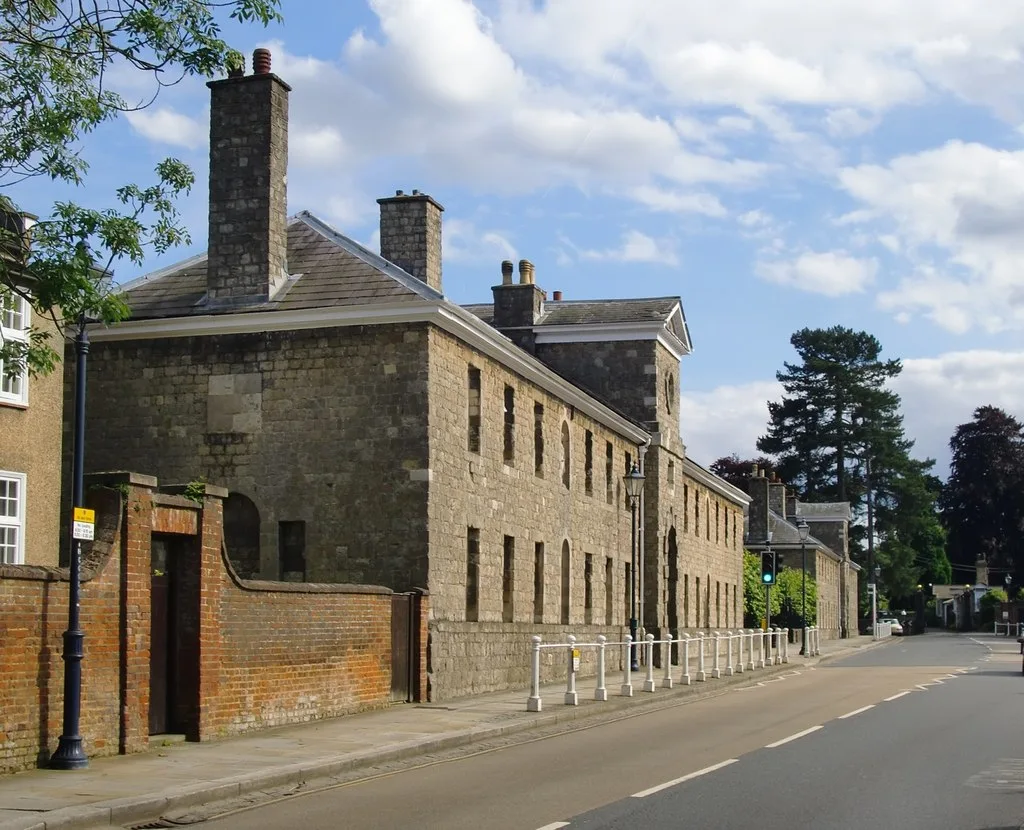
Image: “Sevenoaks Place, the High Street, Sevenoaks” by Stefan Czapski, CC BY-SA 2.0, via Wikimedia Commons (https://commons.wikimedia.org/wiki/File:Sevenoaks_Place,the_High_Street,_Sevenoaks-geograph.org.uk-_3051247.jpg).
Have your say