
Bob Ogley's 80-page History of the Stag Theatre costs £20, with all proceeds going to the theatre. The free launch is on 9 December; RSVP essential.
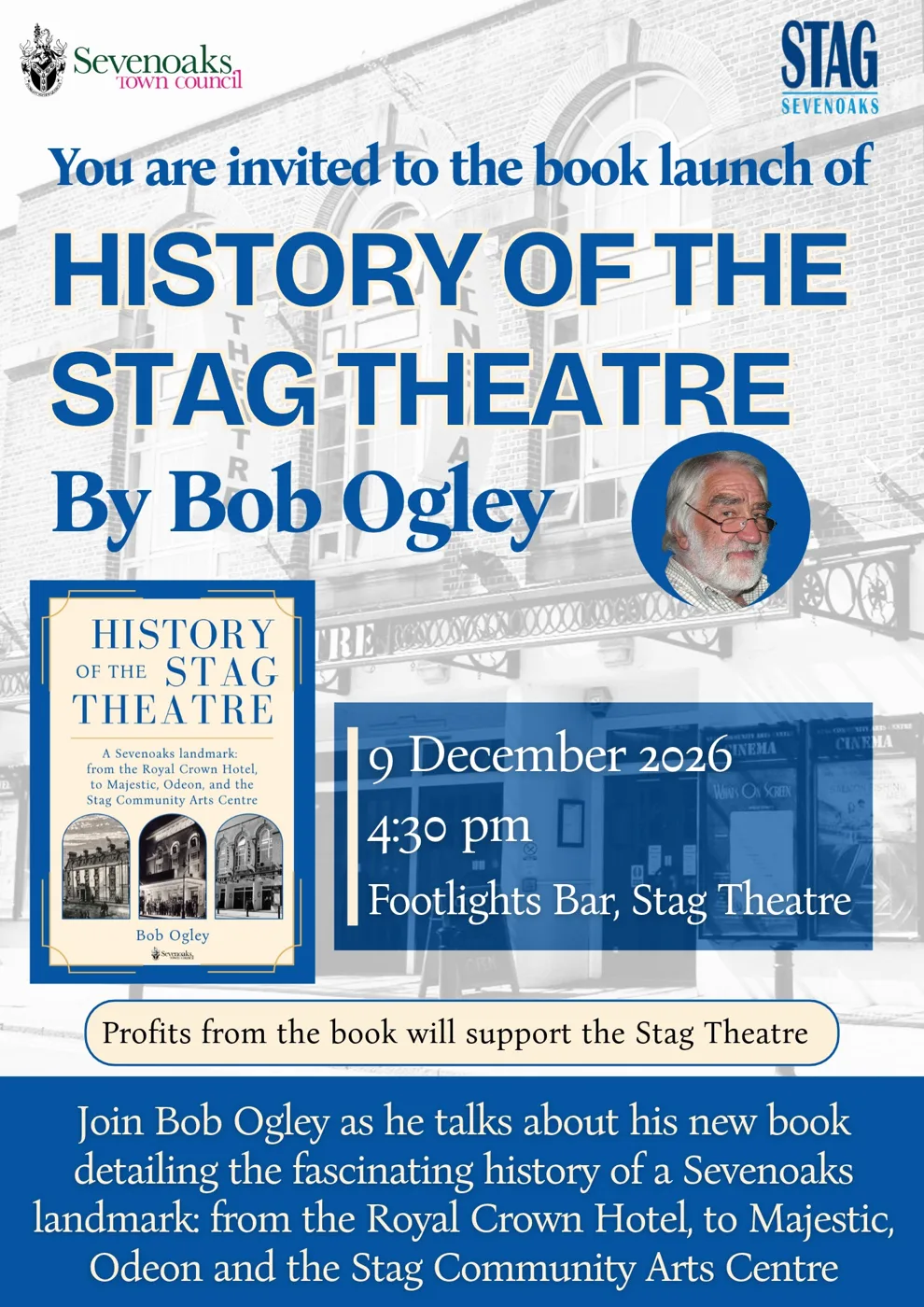
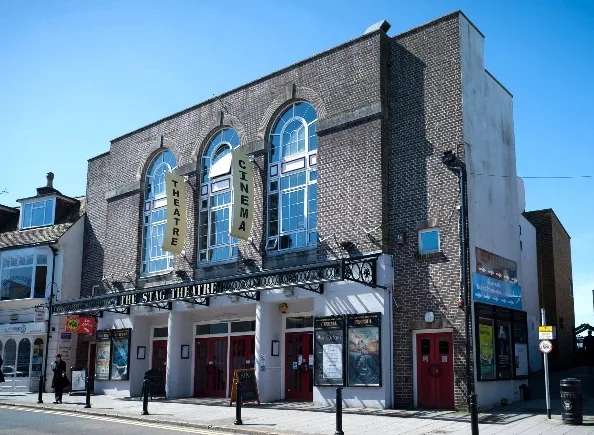
Sevenoaks historian Bob Ogley has written a history of the Stag Theatre site, from the Royal Crown Hotel to the Majestic and Odeon cinemas and today’s arts centre, and every penny it makes goes to the theatre. The 80-page book, History of the Stag Theatre, is published in December at £20, and Sevenoaks Town Council is holding a free launch in the theatre’s Footlights Bar at 4.30pm on Wednesday 9 December.
Overview
- The book: History of the Stag Theatre by Bob Ogley, 80 pages of stories and photographs, £20.
- Where the money goes: all proceeds to the Stag Theatre Community Arts Centre, the author says.
- The launch: Wednesday 9 December 2026, 4.30pm, Footlights Bar, Stag Theatre, Sevenoaks. Free, organised by Sevenoaks Town Council. Space is limited, so it is essential to RSVP: entry is reserved for those who do. Email communityeng@sevenoakstown.gov.uk.
- How to order: email Bob Ogley at bobogley129@gmail.com or phone 01959 562972. He will send signed copies and can deliver to readers who live locally.
One site, four lives
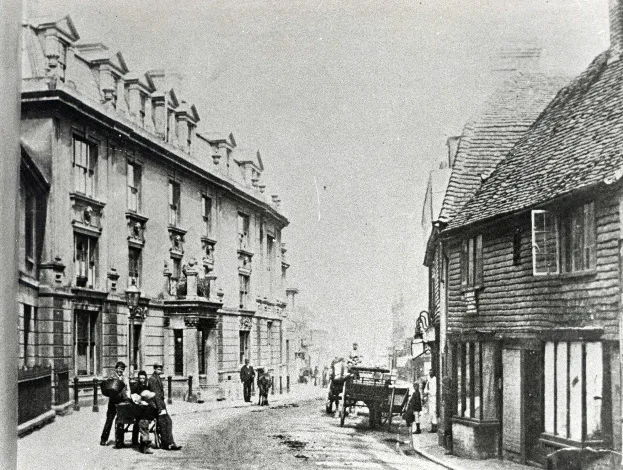
The cover sums it up: “A Sevenoaks landmark: from the Royal Crown Hotel, to Majestic, Odeon, and the Stag Community Arts Centre.” Ogley says the book covers “the visitors to the great hotel, the wonderful postwar films and how the cinema, then theatre, had to be rescued time and time again, ending up in the ‘safe hands’ of Sevenoaks Town Council.”
“For many years now the Stag Theatre has been the heartbeat of the Sevenoaks community as it brings people together through storytelling and creativity,” he writes. “It exists on the very spot where visitors to the Royal Crown Hotel were made so welcome and later where the Majestic and Odeon brought us the magic of cinema.”
The book was produced to raise money for the theatre after the town council’s decision to buy the building. In his introduction Ogley records that a survey found 295 people in favour of buying the freehold and 29 against, that a petition gathered more than 7,700 signatures, and that community fundraising brought in more than £100,000.
Saturday morning pictures for 6d
The idea goes back to Ogley’s years as “Chronicler”, writing about the great days of the Odeon. He grew up with it. The children’s cinema club opened soon after the war, he writes, and “on that first day a queue of excited children stretched down the London Road waiting for the doors to open. It cost 6d to be a member for a year and worth every penny to see such heroes as Roy Rodgers, Jimmy Stewart and Grace Kelly.”
“I joined in the cheering, and sometimes the booing, and sang the National Anthem with great gusto at the end of the show,” he writes. “I was not quite a teenager, but I found that two or three hours in the front row of the stalls to be an impregnable citadel against the rationing and shortages which so worried my mother. She, too, was a cinema buff.”
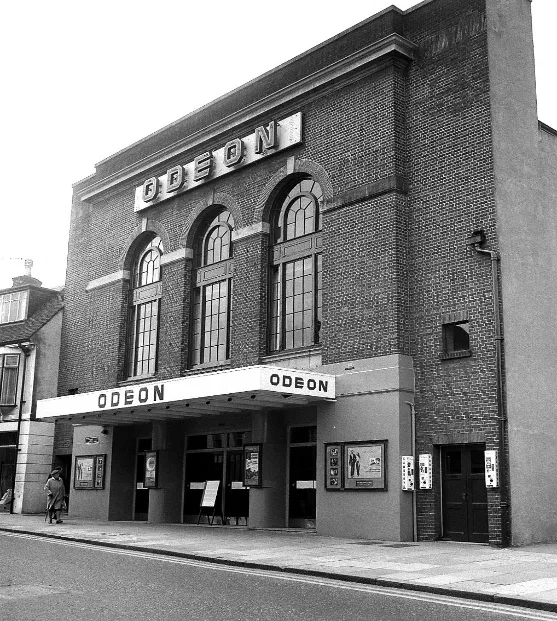
Later came the films he saw with the girl who would become his wife: High Noon, Sunset Boulevard, On the Waterfront, Gunfight at the OK Corral, Blackboard Jungle and East of Eden. As a reporter on the Sevenoaks News he met the manager, projectionists and backroom staff, and the paper reviewed the films every week. “There was usually a double bill but on occasions a blockbuster would remain at the Odeon for an entire week.”
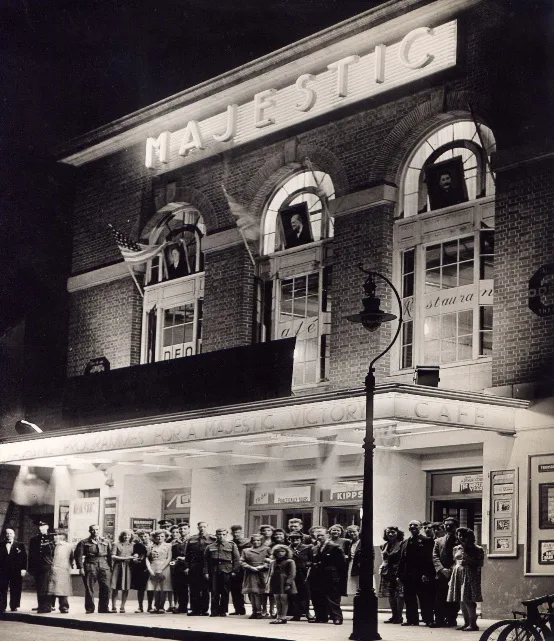
The cinema began as the Majestic, which within a few years became part of the Rank Organisation. Its opening, he writes, “was a morale booster for thousands of Sennockians”, and “there was no mourning for the loss of the great Royal Crown. The magnificent hotel had been demolished without protest.” For the next 40 years the Odeon enjoyed “a healthy rivalry with the Granada”. Then, in 1983, came the deal between Sevenoaks District Council, the Sevenoaks Theatre Action Group (STAG) and the Rank Organisation that led to the theatre.
Before the cinema: coaches, inns and the first post office
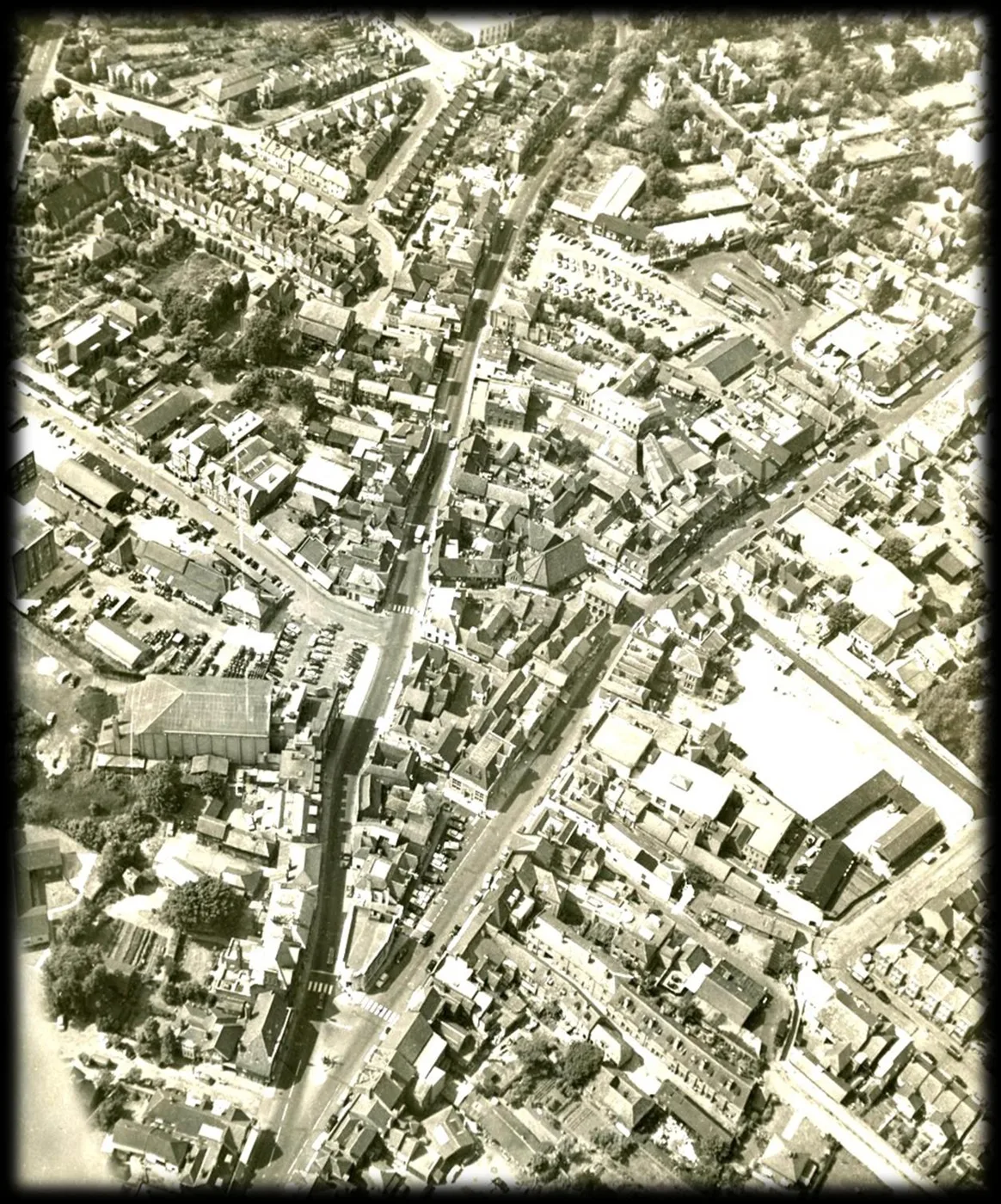
The book reaches back well before the films. An aerial view taken in 1956 shows the Odeon as by far the largest building in the town centre, by the entrance to South Park, and the old hotel gardens in use as parking.
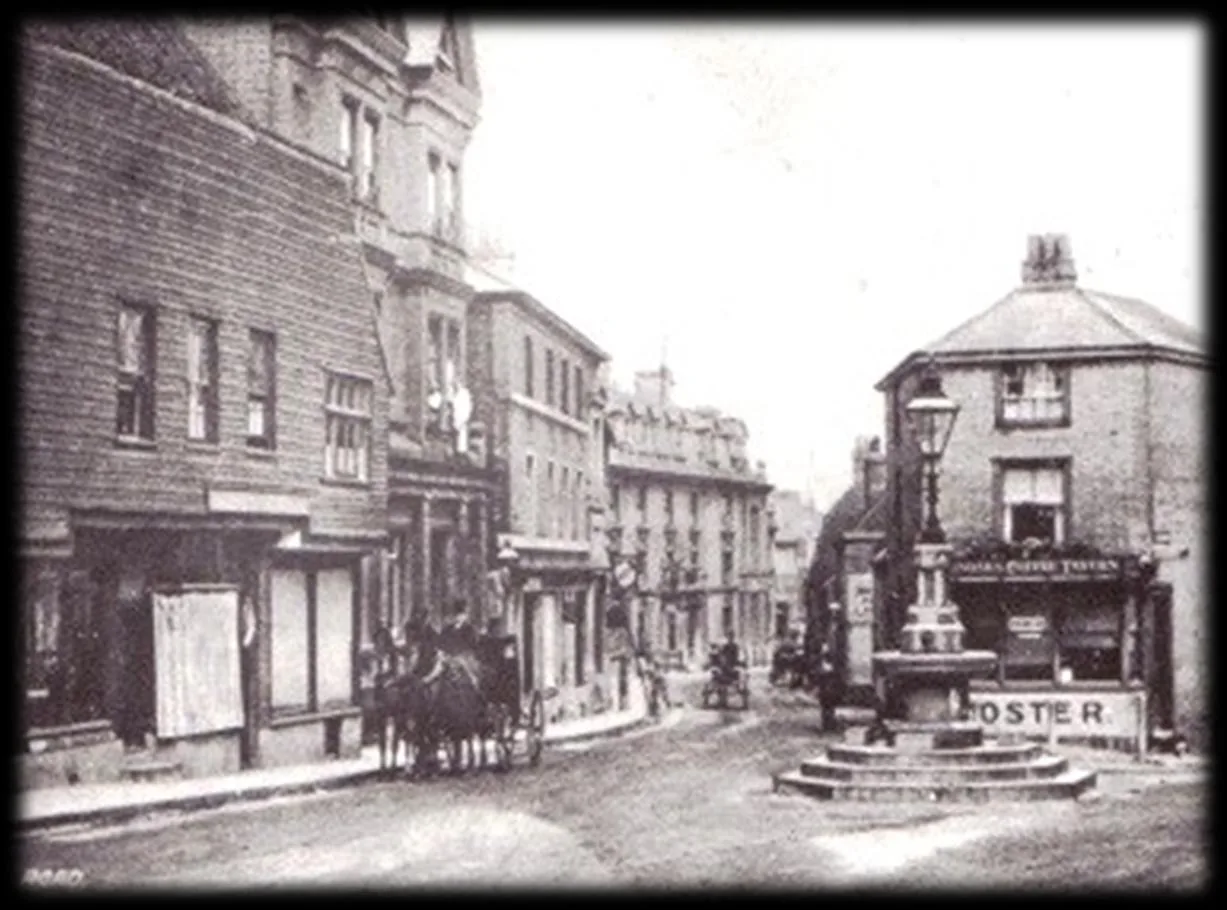
A faded mid-19th-century photograph in the book shows the fountain at the junction of London Road and the High Street, with horses and traps that Ogley suggests are “presumably, leaving the Royal Crown and on their way to Tonbridge or beyond”.
There are chapters on Coffee House Yard, once home to the Old Assembly Room, and on the Wheatsheaf Inn, a few yards south of the Crown. Drawing on Archie Donald’s The Posts of Sevenoaks in Kent, Ogley tells how the first Sevenoaks post office was set up in the Wheatsheaf’s yard in 1810, and how the Royal Mail coach from Hastings stopped there every morning at “a quarter before three” on its way to Farnborough, Bromley and Lewisham.
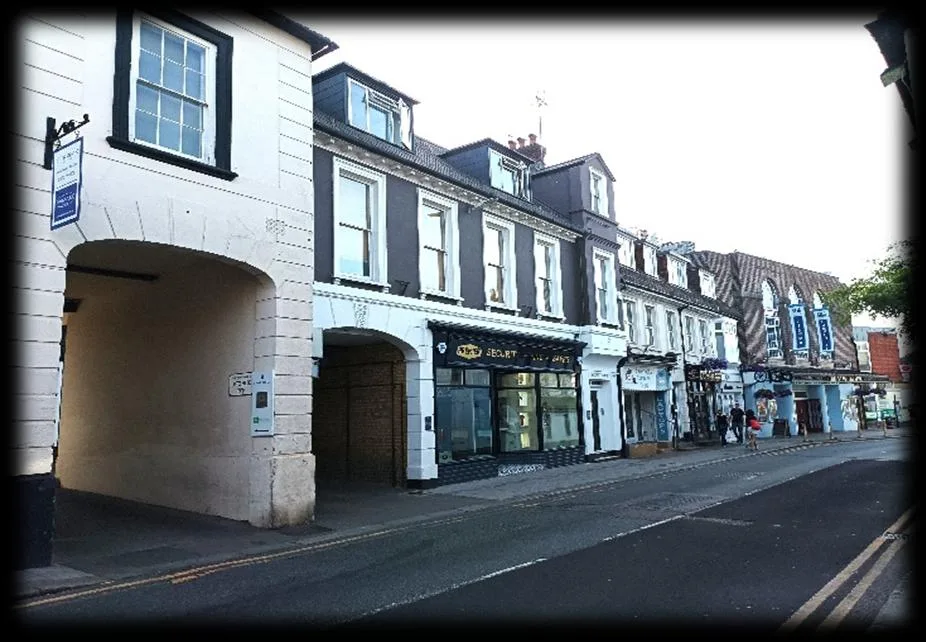
“Sevenoaks is a small town,” he writes, “but it has always brought together the owners of local businesses, those who commute, students and retirees.” He hopes the stories show “how much we must continue to show our support”.
Ordering a copy
Readers can order History of the Stag Theatre direct from Bob Ogley by email at bobogley129@gmail.com or by phone on 01959 562972. “I will be delighted to send signed copies,” he says, “and I can deliver to those who live locally.” His book The Story of Knole Park is also available from him.
The launch is in the Footlights Bar at the Stag at 4.30pm on Wednesday 9 December, where he will talk about the book. Entry is free, but space is limited and it is essential to RSVP: entry is reserved for those who do. To RSVP, email Sevenoaks Town Council, which is organising the launch, at communityeng@sevenoakstown.gov.uk.
Have your say