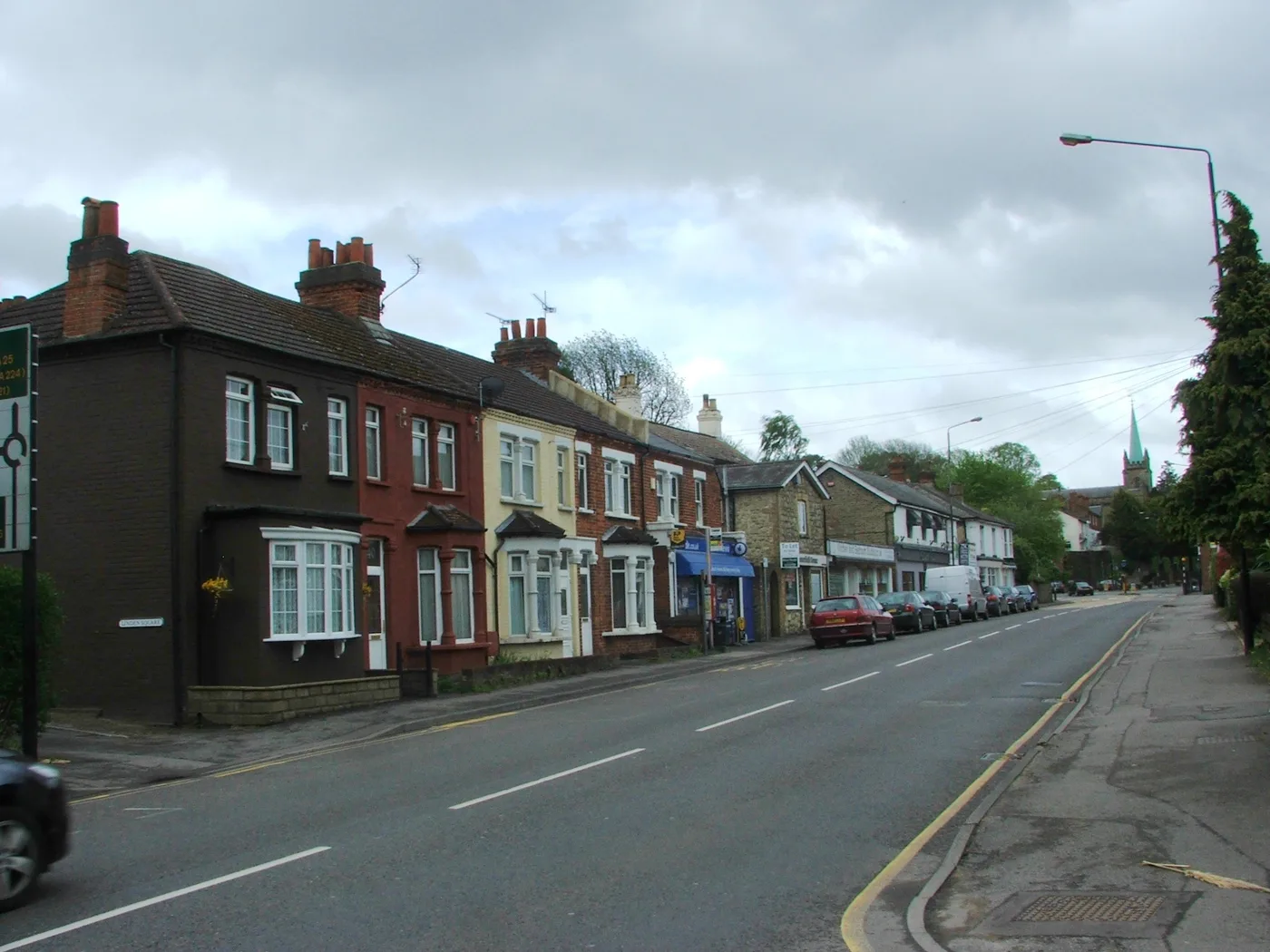

Riverhead's 2026 Highway Improvement Plan puts the A25 London Road zebra crossing first, and the parish council is holding back reserves to fund the bid.
Riverhead Parish Council has named the zebra crossing on the A25 London Road, between St Mary’s Church and Billington Travel, as the single highest priority in its 2026 Highway Improvement Plan, and it is now shaping its budget around paying for a replacement. The plan was approved unanimously by show of hands, submitted to Kent County Council on 15 June and published on the parish council’s website at the end of July. (Riverhead Parish Council, Highway Improvement Plan 2026 (PDF); Riverhead Parish Council, June minutes 2026 (PDF))
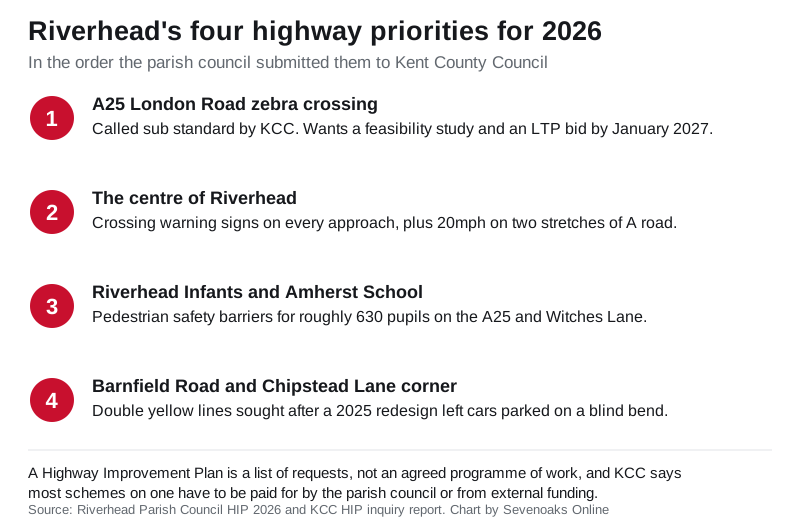
The plan is blunt about the crossing. It records that the existing zebra is acknowledged by KCC to be sub-standard by current design standards, that it sits on a short dual-carriageway section of the A25 with high traffic volumes, that pedestrians have to assess multiple lanes of traffic at once, that visibility is constrained by queuing vehicles and that the central refuge island is narrow. It says the crossing is heavily used, including by school children, and that there is a history of serious collisions at or near the location, the most recent in November 2025. Parish-funded work to improve the visibility of the Belisha beacons has already been done, and the council says significant safety concerns remain. (Riverhead Parish Council, Highway Improvement Plan 2026 (PDF))
What the council is asking for
Rather than pick a single fix, Riverhead has asked KCC for an engineer-led feasibility assessment to identify a deliverable scheme, and made the point that a combination of measures should be considered together rather than each option judged in isolation. The options it lists include upgrading the zebra to a signal-controlled or pelican crossing, changing its layout or moving it, narrowing the crossing distance or improving the refuge, and any other engineering fix the assessment throws up. The stated outcome the council wants is a scheme good enough to put forward as a Local Transport Plan funding bid by January 2027. (Riverhead Parish Council, Highway Improvement Plan 2026 (PDF))
The evidence gathering has already happened. Minutes from the June meeting record that a pedestrian camera and four-lane vehicle counting cables were installed on 2 June by the contractor Citisense, that the seven-day survey finished on 9 June, and that after processing the data was due to go to KCC’s engineering team around the end of June for a crossing upgrade feasibility assessment. The same minutes note that KCC had not at that point committed to a timeline for coming back with the results. (Riverhead Parish Council, June minutes 2026 (PDF))
The other three priorities
Second on the list is the centre of Riverhead itself, where four A roads meet at two mini roundabouts with three pedestrian crossings, one of them across a dual carriageway. The plan notes the junction is used as a diversion route including by HGVs when the M25 has problems, and that children catching school buses to Tonbridge and Tunbridge Wells use it. The council wants triangular warning signs for the crossings on all approaches, on Worships Hill, Maidstone Road and Amherst Hill, and 20mph limits on two stretches: from Montreal Road on Amherst Hill along the A224 to the Bullfinch public house on London Road, and on the A25 Maidstone Road from Shoreham Lane to Cold Arbour Road. (Riverhead Parish Council, Highway Improvement Plan 2026 (PDF))
Third is the schools. The plan states that the safety of nearly 630 pupils is at risk because of inadequate roadside protection at two sites: Riverhead Infants on the A25 Worships Hill, with roughly 270 pupils, where children, parents and siblings leaving the school are managed by a single pedestrian barrier on each kerbside, and Amherst School on Witches Lane, with roughly 360 pupils, which the plan says has no safety barrier outside its main entrance and exit at all. The council is asking for additional barriers on both sides of the A25 at Riverhead and a barrier immediately outside the Amherst gates. (Riverhead Parish Council, Highway Improvement Plan 2026 (PDF))
Fourth is the corner of Barnfield Road and Chipstead Lane. The plan argues that a 2025 redesign, in particular the continuous road dividers and centre-line markers, removed what had functioned as an informal junction where drivers negotiated priority, and that cars parked on the blind corner now force traffic coming out of Barnfield Road onto the wrong side of the road into oncoming vehicles. County member Nigel Williams is recorded in the plan as advocating for double yellow lines on that stretch. (Riverhead Parish Council, Highway Improvement Plan 2026 (PDF))
The money, and what has been sacrificed for it
This is where the story stops being a wish list. The parish council’s June finance report shows reserves stood at £80,462 at the start of the financial year, with a projected village hall surplus target of £8,000 taking the potential pool to £88,462, against projected reserves spending for 2026 of around £55,000. That leaves a projected year-end balance of £33,398, or £53,398 once £20,000 of working capital is counted, against a precept of £69,876. Members recorded that this amounts to roughly nine months of net revenue held in reserve, where council policy is to hold twelve. (Riverhead Parish Council, June minutes 2026 (PDF))
Inside that £55,000 sits £25,000 earmarked for the crossing bid, and the minutes are candid that the figure may not hold. It is described as a baseline estimate built on a suggested 25 per cent match funding contribution towards a £100,000 scheme. The council’s own note adds that the total project is likely to exceed £200,000, so the commitment may need to escalate significantly if the bid succeeds. (Riverhead Parish Council, June minutes 2026 (PDF))
Two decisions in June show what that means in practice. Quotes of roughly £5,000 for a new storage shed at the village hall, against a £1,900 reserve budget, were postponed along with a linked £2,000 astro-turf proposal, described as nice to have rather than essential, expressly to protect reserves and maximise the chance of a successful, higher-value contribution towards the crossing bid. (Riverhead Parish Council, June minutes 2026 (PDF))
Then the council unanimously rejected a KCC quotation of £2,610.40 to install dropped kerbs at the Miller and Carter entrance and exits. Because that request had originated under the parish council’s own HIP, KCC required it to be entirely self-funded. Members objected to the piecemeal nature of the proposal, said no village-wide accessibility survey had been carried out and that approving one localised site risked setting an unsustainable precedent, and noted that their recent community survey produced no feedback raising accessibility at that site while showing that safety at existing crossings in Riverhead was a top priority for respondents. (Riverhead Parish Council, June minutes 2026 (PDF))
The next step was on the agenda for the Full Council meeting on 20 July, as a motion to approve a design fee of £2,083 excluding VAT for a potential upgrade to the London Road zebra crossing, to be funded from reserves. Minutes of that meeting have not yet been published, so the outcome is not yet on the public record. (Riverhead Parish Council, Full Council agenda, 20 July 2026 (PDF))
What it means for residents
A Highway Improvement Plan is not a work programme, and it is worth understanding that before hopes get up. KCC’s own scrutiny report into HIPs found that many parish councils were unaware that a HIP is simply a list of potential improvements, and that funding for the projects on it is unlikely to come from KCC. The report warned that this misunderstanding raises residents’ expectations and produces complaints to parish councils when the work does not appear. It also found that the statutory work of KCC’s Road Safety and Active Travel Group, including crash remedial measures and Local Transport Plan schemes, takes precedence over HIP requests. (Kent County Council, Highway Improvement Plans Short Focused Inquiry Report, December 2022 (PDF))
That is exactly the pattern visible in Riverhead’s own paperwork: a HIP request for dropped kerbs came back as a bill the parish would have to pay in full. It is also why the council is treating the crossing as a funding bid rather than a request, and why the reserves argument is the real story rather than the plan itself.
If you want something looked at, the routes are different depending on what it is. A pothole, a broken sign, a blocked drain or an overgrown verge is a maintenance issue and goes straight to KCC through its report a problem tool, not into the HIP, which the template states explicitly is for new schemes and not a maintenance log. A new crossing, a speed limit change or traffic calming is a HIP item, and the June minutes show the council is already collecting suggestions for HIP 2027, including an updated proposal on parking in St Mary’s Drive. (Riverhead Parish Council, Highway Improvement Plan 2026 (PDF); Riverhead Parish Council, June minutes 2026 (PDF))
Riverhead Parish Council meetings are open to the public, agendas are published in advance, and the next Full Council meeting is on 21 September at Riverhead Village Hall. (Riverhead Parish Council, Full Council agenda, 20 July 2026 (PDF))
The precept the council is measuring its reserves against, £69,876, is the parish share of your council tax bill, collected by Sevenoaks District Council on the parish’s behalf. Our guide to council tax bands in Sevenoaks explains how the district, county and parish shares fit together. For the wider picture on district roads, see our roadworks and travel update.
Sources
- Riverhead Parish Council, Highway Improvement Plan 2026 (PDF)
- Riverhead Parish Council, HIP 2026
- Riverhead Parish Council, June minutes 2026 (PDF)
- Riverhead Parish Council, Full Council agenda, 20 July 2026 (PDF)
- Riverhead Parish Council, Highways Committee agenda, 3 July 2026 (PDF)
- Kent County Council, Highway Improvement Plans Short Focused Inquiry Report, December 2022 (PDF)
- Kent County Council, Report a problem on the road
Image: London Road, Riverhead by Chris Whippet, CC BY-SA 2.0, via Geograph.
Have your say