
Sevenoaks, Swanley, Edenbridge and Westerham town councils have jointly objected to ending the levy on schemes of 10+ homes, citing developer cash left unspent.
The district’s four town councils have jointly objected to Sevenoaks District Council’s plan to stop charging the Community Infrastructure Levy (CIL) on housing schemes of 10 or more homes.
Sevenoaks, Swanley, Edenbridge and Westerham town councils signed a single letter to the district council, dated 7 September. They say the change would make the levy “negligible” in exactly the places expected to take most of the district’s new housing. Sevenoaks Town Council published the letter’s points on 28 September, and Edenbridge Town Council published the full letter on 30 September. (Edenbridge Town Council, joint response)
What the district council proposes
CIL is a fixed charge per square metre on new building, paid by developers. Under the district’s draft charging schedule, it would apply only to housing schemes of one to nine homes. Larger housing schemes and all non-residential building would pay through Section 106 agreements instead, negotiated one site at a time. (Sevenoaks District Council, Draft CIL Charging Schedule review)
The difference matters to towns and parishes. Under CIL, 25 per cent of what is collected in a town or parish goes straight to its council. The other 75 per cent is held by the district council, which invites bids for it through its CIL Spending Board. Section 106 money carries no automatic local share. (Sevenoaks Town Council, press release, 28 September 2026)
The consultation opened on 6 August and closed on 17 September, according to the district council’s consultation page. Edenbridge Town Council’s article gives a closing date of 1 October; the district council’s own page says 17 September. Our report on the published responses covers what residents and parishes said.
The towns’ counter-offer
The four councils propose a different threshold. CIL would keep applying to every housing scheme of 149 homes or fewer, and to all householder applications. Only schemes of 150 homes or more would move to Section 106 alone.
They say 150 is not arbitrary: it reflects the district’s existing 150-dwelling delegated authority threshold.
If the district presses ahead, the towns want town and parish councils, at a minimum, to be:
- formally consulted when significant Section 106 contributions are negotiated
- able to name their own infrastructure priorities
- told what was agreed and what it is for
- warned when contributions are close to their expiry date
- consulted before any money is redirected or handed back to developers
- given clear figures on what was spent and delivered
They point to Tonbridge and Malling, where parishes send in annual project lists and are contacted before contributions expire, as the model.
Section 106 money that went astray
The letter lists cases where, the four councils say, Section 106 money was left unspent, spent elsewhere, or failed to deliver. The councils list:
- cricket facility funding sent to the county cricket board in Canterbury instead of local indoor facilities
- a £30,000 NHS contribution from Sevenoaks applications dating back to 2013, unspent for about 13 years
- £1 million given to Network Rail for a disability bridge in Edenbridge, redirected “against the towns wishes”
- a doctors’ surgery built through Section 106 at Leybourne that never opened, because the NHS could not afford the rent
- infrastructure linked to the Sevenoaks quarry development delayed for years
- unspent Section 106 money returned to developers rather than passed to the parishes affected
These are the town councils’ examples. The letter does not give dates or references for each one, and we have not yet seen the district council’s response to them.
What CIL has paid for
The letter lists what the levy has funded in each town:
- Swanley: a skate park, soft play, four playgrounds, public toilets, a water park, sports pitches and the 20mph zone through Swanley Village
- Sevenoaks: the Greatness pavilion and play area, solar panels, Bat and Ball station improvements, pedestrian works and 20mph schemes
- Edenbridge: the medical centre, doctors’ equipment, community buildings and grants to schools
- Westerham: King George’s Field, a new skate park, a replacement footbridge, play equipment, a perimeter path and four new parking areas
The Greatness Football and Community Centre alone took £787,500 from the district’s CIL board and £221,100 of the town council’s own CIL, Sevenoaks Town Council says. (Who paid for the Greatness centre)
Timing and reorganisation
The towns also question the timing. Kent’s councils are due to be reorganised into new unitary authorities, and the letter acknowledges the process has been paused. It says the four councils in the proposed West Kent authority each handle CIL and Section 106 differently. It says the revised schedule is not expected to be adopted until 2028, and may have to be changed again after reorganisation.
What happens next
The district council will consider the responses before deciding whether to change the draft. A charging schedule has to go through an independent examination before it can be adopted. The towns say they would welcome talks.
For how the levy works now, and what residents and parishes told the consultation, see our earlier report. To follow any planning application in your area, use the council’s planning register or our guide to Sevenoaks planning applications.
Sources
- Swanley, Sevenoaks, Edenbridge and Westerham town councils, joint letter to Sevenoaks District Council on the proposed CIL changes, 7 September 2026 (PDF)
- Sevenoaks Town Council, Sevenoaks Town Council responds to proposed changes on how developer contributions are received, 28 September 2026
- Edenbridge Town Council, Town Council raises concerns over proposed changes to infrastructure funding, 30 September 2026
- Sevenoaks District Council, Draft CIL Charging Schedule review
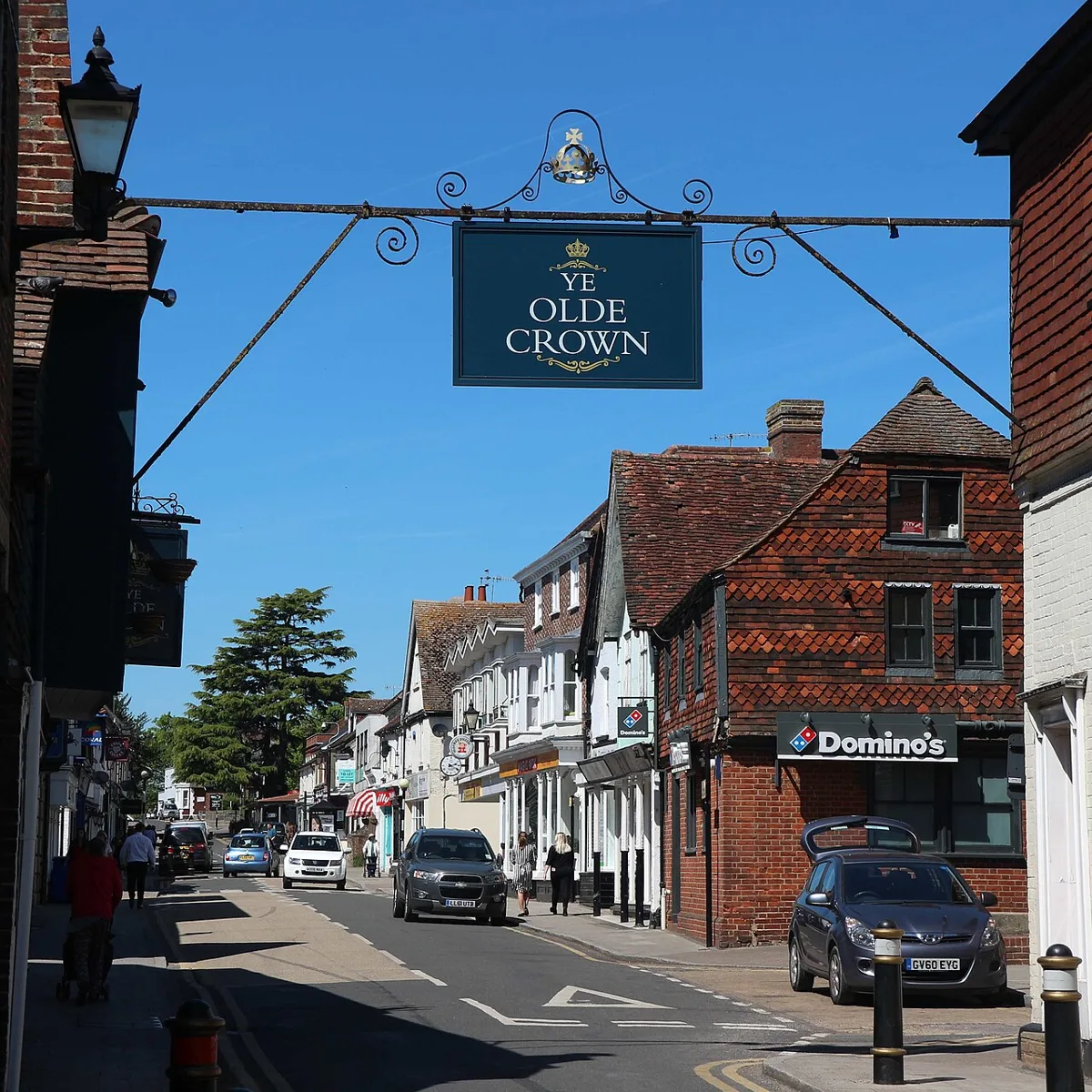
Image: High Street, Edenbridge by Oast House Archive, CC BY-SA 2.0, via Geograph and Wikimedia Commons.
Have your say