
Sevenoaks councillors agreed to hold disabled facilities grants to the 55 and 130-day national targets, but the proposed MND fast track was amended out.
Sevenoaks District Council has committed to work with Kent County Council on speeding up the home adaptations funded by disabled facilities grants for people with motor neurone disease and other rapidly progressive conditions, after a motion brought on behalf of a councillor who has been diagnosed with MND. Councillors agreed to hold the process to national target timeframes of 55 days for simple adaptations and 130 days for complex ones, and to write to KCC setting out that expectation. (Sevenoaks District Council, Council draft minutes, 14 July 2026)
The motion was proposed at the Council meeting on 14 July by Cllr Richard Streatfeild and seconded by Cllr Claire Shea, both Liberal Democrats. According to the minutes, Cllr Streatfeild told the meeting that personal experience had motivated the motion, and that Cllr Nicholas Varley had received a diagnosis of motor neurone disease. Proposing it in Cllr Varley’s absence, he said, was a privilege, an honour, a duty and a duty of hope. Cllr Shea later read out a written submission by Cllr Varley setting out his personal reasons for the motion. (Sevenoaks District Council, Council draft minutes, 14 July 2026)
What the council agreed
The resolution passed by Council opens by recognising “that people with progressive conditions should be able to apply for adaptations as early as possible following diagnosis, so that their future needs can be anticipated rather than responded to in crisis”, and that early intervention can save taxpayer money by reducing the need for critical interventions later. (Sevenoaks District Council, Council draft minutes, 14 July 2026)
It then commits the council to three things: working with KCC “to explore how their processes could be more efficient without reducing the number of people who can be assisted with home adaptations with progressive or terminal conditions such as MND”, ensuring the 55-day and 130-day timeframes are adhered to; reviewing how it prioritises and delivers disabled facilities grants within existing resources to see what can be sped up, reporting back to a future Housing and Health Advisory Committee and to Full Council; and writing to Kent County Council to set out the council’s expectations of KCC’s part in the process. (Sevenoaks District Council, Council draft minutes, 14 July 2026)
The two timeframes are not the council’s own invention. As the motion paper sets out, they come from the national guidance published by Foundations on disabled facilities grant delivery standards. (Sevenoaks District Council, Motions to Council, 14 July 2026)
What was asked for, and what was dropped
The motion that reached the chamber was more demanding than the one that passed. As originally tabled, it committed the council “to introducing a fast-track process for delivering home adaptations for people with progressive or terminal conditions such as MND”. It also argued that 55 days, almost two months, “should be seen as a maximum”, and that the timeframe was not appropriate for smaller adaptations such as ramps or stairlifts, which can be completed much faster. (Sevenoaks District Council, Motions to Council, 14 July 2026)
Cllr Streatfeild himself amended the motion at the meeting, with his seconder’s agreement, softening “to commit” into exploring and committing to a report going to the next Housing and Health Advisory Committee and then to Full Council for a decision on what was possible. A further amendment was then proposed, which the minutes do not attribute to a named member, keeping the first two paragraphs and replacing the fast-track commitment with the working-with-KCC wording that was finally agreed. The commitment to introduce a fast-track process, and the line that 55 days should be treated as a maximum, are not in the resolution the council passed. (Sevenoaks District Council, Council draft minutes, 14 July 2026)
The home adaptations motion was not the only one reshaped that evening. Councillors passed a Green Party climate motion at the same meeting only after an amendment cut seven proposed commitments down to two, and in the night’s main decision they voted to approve a loan of up to £40m for the Land East of the High Street regeneration.
The debate itself was supportive across the chamber. The minutes record many members backing what they described as practical and compassionate steps, with several saying the current timeframe for adaptations was too long and that in many cases the work was completed too late to make the difference it was needed for. Members noted that a number of councils have already introduced a fast-track route for simple adaptations. (Sevenoaks District Council, Council draft minutes, 14 July 2026)
Why Sevenoaks says the delays are not all its own
The counter-argument put in the chamber was that the district council is one of the better performing authorities on disabled facilities grants, but that not all applications are processed as quickly as anyone would want because the system is provided on behalf of Kent County Council, putting some factors outside the district council’s control. That is why the resolution ended up pointing at KCC. (Sevenoaks District Council, Council draft minutes, 14 July 2026)
Members were also reminded of two measures already in place. The Private Sector Housing Grant Policy adopted in March 2026 exempts applicants with terminal illnesses, including conditions such as motor neurone disease and Huntington’s disease, from the means testing process for disabled facilities grants, which removes one barrier at what the minutes call an extremely difficult time for residents and their families. Separately, the council operates a safe and secure grant scheme providing funding of up to £5,000 for minor adaptations and modifications that promote independence and safety in the home. (Sevenoaks District Council, Council draft minutes, 14 July 2026)
What it means for residents
If you or someone in your household needs the home adapted, the route has not changed. The first step is an assessment by an occupational therapist from Kent County Council, not from the district council. The council’s own page on disabled facilities grants gives KCC’s occupational therapy number as 03000 41 61 61. The therapist visits, decides whether the need is eligible, and refers the recommendation to Sevenoaks District Council, which then contacts you to start the grant process. Homeowners, private tenants and housing associations can apply, and the grants cover work such as stair lifts, replacing a bath with a shower room and improving access into and around the home. (Sevenoaks District Council, Disabled facilities grants)
Grants are means tested on the income and savings of the disabled person and their spouse, with exceptions for disabled children, for people receiving qualifying benefits, and, under the March 2026 policy, for applicants with a terminal illness. (Sevenoaks District Council, Disabled facilities grants; Sevenoaks District Council, Council draft minutes, 14 July 2026)
The practical thing to watch is the report councillors have asked for. It goes first to the Housing and Health Advisory Committee and then to Full Council, and it is where any actual change to how quickly adaptations get done will have to show up. Committee papers are published in advance on the council’s meeting system, and meetings are open to the public. Our guide to council tax bands explains how the district and county council split responsibility for services locally, which is the same split that sits behind the delays described in this debate.
Frequently asked questions
How do I apply for a disabled facilities grant in Sevenoaks?
Start with Kent County Council, not the district council. Ask for an assessment by an occupational therapist on KCC’s occupational therapy line, 03000 41 61 61. The therapist visits, decides whether the need is eligible, and refers the recommendation to Sevenoaks District Council, which then contacts you to begin the grant process. Homeowners, private tenants and housing association tenants can all apply.
How long should a disabled facilities grant take in Sevenoaks?
The national delivery standards published by Foundations set 55 days for a simple adaptation and 130 days for a complex one. On 14 July 2026 Sevenoaks councillors agreed to hold the process to those two timeframes and to write to Kent County Council setting out that expectation. The council also argues that not every delay is within its control, because the service is provided on behalf of KCC.
What work does a disabled facilities grant cover?
Adaptations that make the home usable, among them stair lifts, replacing a bath with a shower room, and improving access into and around the property.
Is the disabled facilities grant means tested?
Usually yes, on the income and savings of the disabled person and their spouse. There are exceptions for disabled children and for people receiving qualifying benefits, and under the Private Sector Housing Grant Policy adopted in March 2026, applicants with a terminal illness, including motor neurone disease and Huntington’s disease, are exempt from means testing altogether.
Is there a fast-track route for MND in Sevenoaks?
No. The motion as originally tabled would have committed the council to a fast-track process for progressive and terminal conditions, but that wording was amended out before the vote. What passed instead is a commitment to work with KCC on the 55-day and 130-day timeframes and to review how grants are prioritised, reporting back to the Housing and Health Advisory Committee and then to Full Council.
What if I only need a small adaptation?
The council runs a separate safe and secure grant scheme, worth up to £5,000, for minor adaptations and modifications that support independence and safety at home.
Sources
- Sevenoaks District Council, Council draft minutes, 14 July 2026 (PDF)
- Sevenoaks District Council, Motions to Council under paragraph 20 of Part 2, 14 July 2026 (PDF)
- Sevenoaks District Council, Council meeting papers, 14 July 2026
- Sevenoaks District Council, Disabled facilities grants
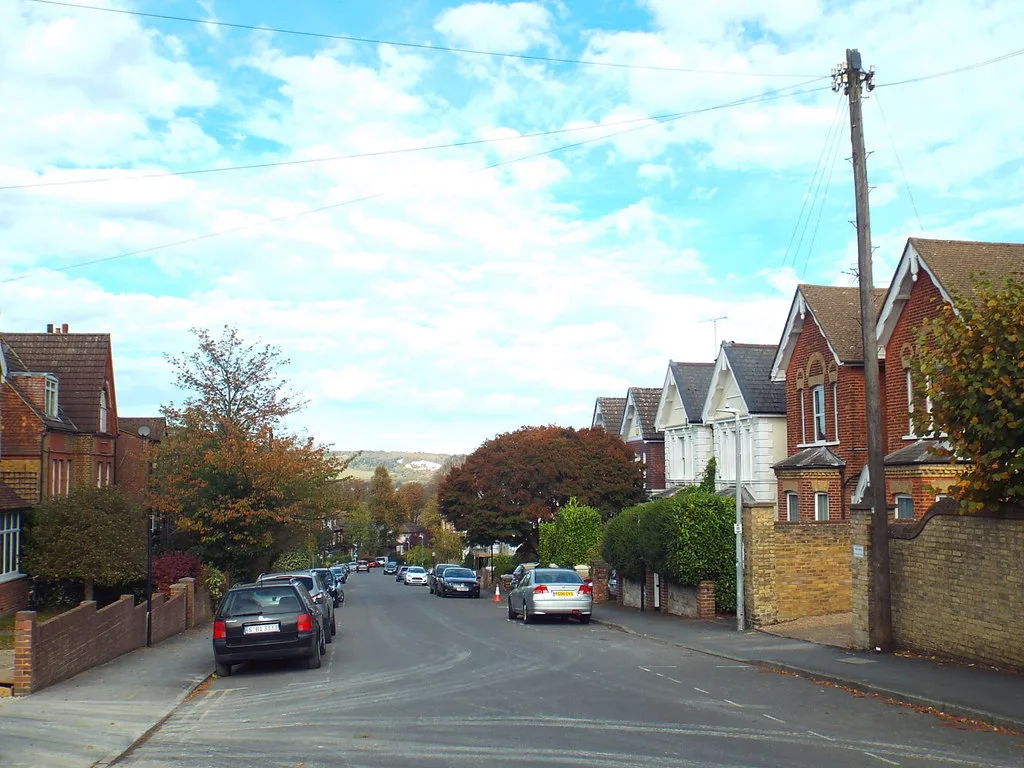
Image: Granville Road, Sevenoaks by Malc McDonald, CC BY-SA 2.0, via Geograph.
Have your say