
The £1.98m Shared Prosperity programme behind Sevenoaks business grants and free training closes on 30 September, and the council expects no replacement.
The government fund that has put almost £2 million into Sevenoaks district’s businesses, high streets and training schemes closes at the end of this month. The council does not expect a replacement.
The figures come from the final monitoring report on the UK Shared Prosperity Fund (UKSPF) and the Rural England Prosperity Fund (REPF). The report went before Sevenoaks District Council’s People & Places Advisory Committee on Thursday 10 September. (People & Places Advisory Committee agenda, 10 September 2026)
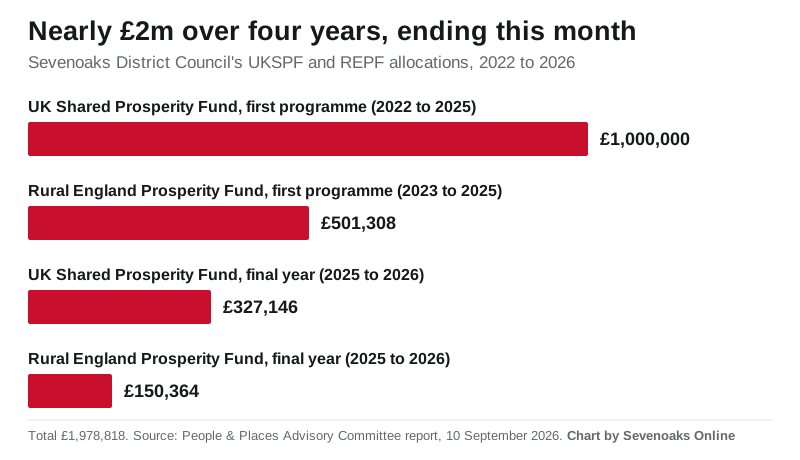
Between 2022 and 2026 the two funds gave the district £1,978,818:
- £1,000,000 of UKSPF for the first programme, from 2022 to 2025
- £501,308 of REPF capital for rural businesses and community organisations
- £327,146 of UKSPF for the final year, 2025 to 2026
- £150,364 of REPF for that final year
The first programme finished with almost nothing left over. The council reported an underspend of £62 on UKSPF and £2,574 on REPF.
What the money paid for
The council chose to spread the funding across many small projects rather than a few large ones. The report says this approach delivered well but stretched a small team’s administration capacity.
Schemes named in the evaluation include:
- SEEDL free online training for local businesses and employees, used by over 400 people
- WorkBoost, which paid employers to take on staff for three-month placements, and whose council page has since been taken down
- Growth Gurus, one-to-one support for young people facing significant barriers to work
- Retail Enhancement Grants for shopfront signage, window displays and accessibility ramps
The outputs are set out in the report’s appendix. In the first programme, 29 enterprises and 133 organisations received grants, 587 people attended training sessions and 19,712 people were reached. In the final year, up to July, a further 80 organisations and enterprises received grants and 8,429 people were reached. (Appendix C, outcomes and outputs summary)
The first programme’s recorded outcomes include 422 people gaining a qualification or completing a training course. It also records 34 people moving into employment and 191 reporting increased employability.
What the evaluation found
The council commissioned CAG Consultants to evaluate the whole programme. Their report, delivered in July, drew on a survey of grant recipients with over 70 responses. (Evaluation report, July 2026)
Among those surveyed, 56% said their grant had a significant impact and a further 30% called it transformational. 82% rated their experience with the council as excellent, and 17% as good.
The evaluators concluded that the “strongest outcomes came from flexible, demand-led programmes delivered through trusted partnerships and supported by sufficient capacity”. The main constraints were short timeframes and funding that was extended in short bursts, which made long-term planning difficult. (Evaluation summary slides)
No replacement in sight
The last allocation of funding ended in March 2026. The government allowed councils to keep delivering until 30 September 2026, with no extra money, and Sevenoaks took that option. Most projects finished by August.
The council’s report is blunt about what comes next. It states there is not expected to be any further UKSPF or REPF money, with much of the successor funding directed to areas with mayoral combined authorities. It names Pride in Place as an example, a programme paid only to a list of named councils. Sevenoaks is not on that list, and the report says there are currently no opportunities for authorities outside it.
What it means for residents and businesses
If you run a local business, the free SEEDL training and the grant schemes this fund paid for are closing with it. The report says case studies are still being gathered, but no new applications are on offer from this pot.
Community and voluntary groups still have one live route to council funding. The district’s own community grant scheme offers up to £5,000 and closes on 6 October. That scheme is separate from the Shared Prosperity programme.
The wider economic backdrop makes the gap more noticeable. The district’s claimant count reached a four-year high in July, and our jobs page lists where local vacancies get posted.
The full evaluation, including the lessons the council says it will apply to any future funding, can be read in the committee papers.
Sources
- Sevenoaks District Council, People & Places Advisory Committee agenda and reports pack, 10 September 2026
- UKSPF and REPF Final Monitoring Report, Appendix C: outcomes and outputs summary
- CAG Consultants evaluation report for Sevenoaks District Council, July 2026
- Evaluation summary slides, Appendix A
- Sevenoaks District Council, SEEDL free training, WorkBoost (page removed) and Retail Enhancement Grants; Sevenoaks District Council, business support
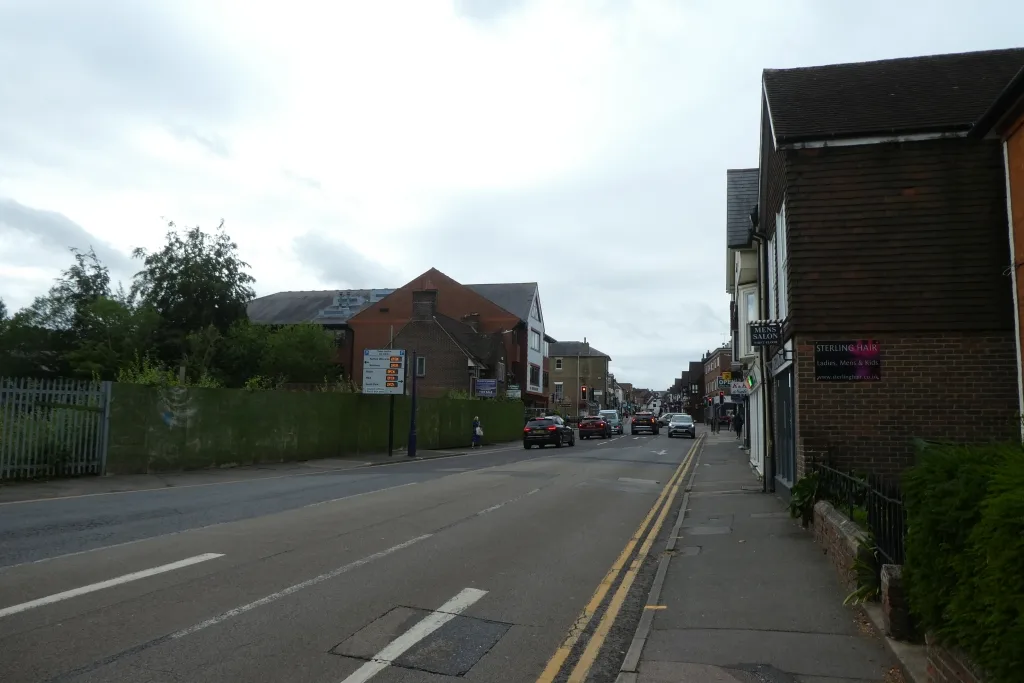
Image: Sevenoaks High Street. Photo by DS Pugh, CC BY-SA 2.0, via Geograph on Wikimedia Commons.
Have your say